
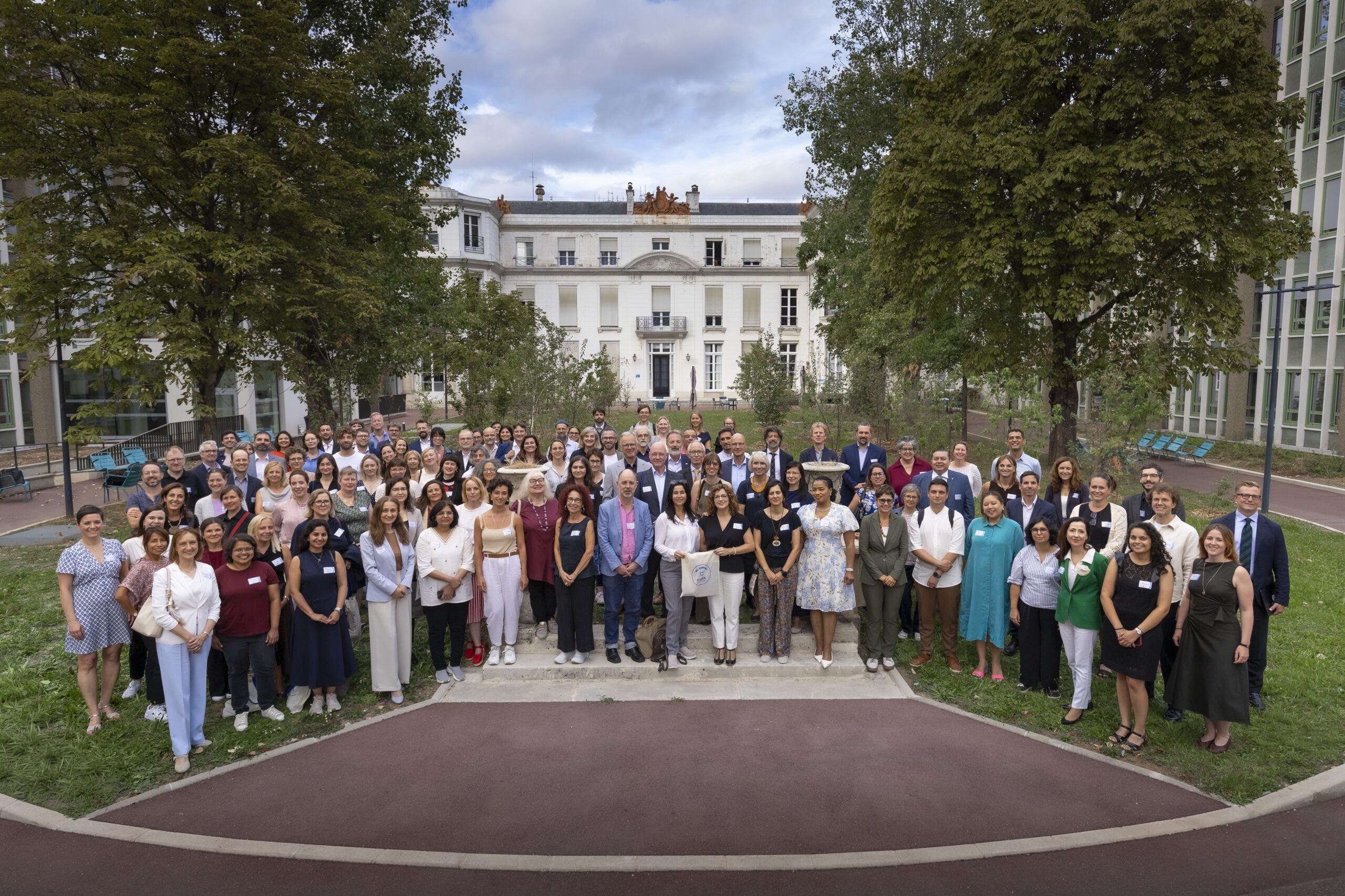
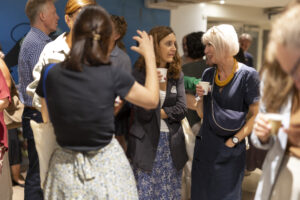
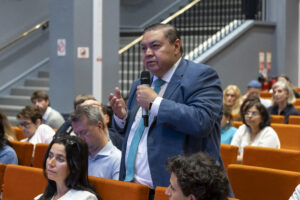
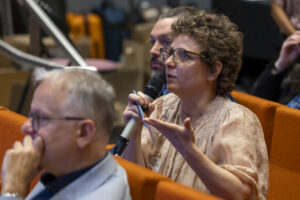
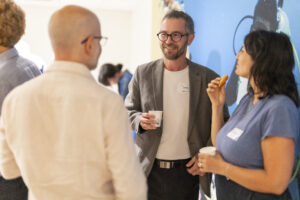
On 7-8 September 2026, CoARA’s diverse implementation communities, including Working Groups, National Chapters, and Cascade Funding beneficiaries, joined together for the first time in-person at the conference, Shaping CoARA’s Future: Strengthened Communities Driving Systemic Change in Research Assessment, in Paris, France. Co-hosted by the ESF, CNRS, Science Europe, and ALLEA, with support from CoARA Boost partners, the conference provided an opportunity to take stock of what has been built so far and to showcase key CoARA outputs, such as experiences, case studies, tools, pilots recommendations, and other resources. Many of these resources are currently available in the evolving CoARA Collection, a community-owned resource library.
The conference offered a platform to not only examine and celebrate what has been achieved so far within the CoARA community, but also to bring together representatives from the global reform movement to further build complementarity between initiatives and to look towards how key outputs can contribute to the next phase of the coalition. Over the two-day event, the conference explored a shared question: how do we move from building the foundations of research assessment to embedding new approaches into everyday assessment practices?
The first day of the conference reflected on the current state of reform and showcased outputs from CoARA’s core implementation communities. The second day of the conference explored how to strengthen collective alignment and further drive implementation in CoARA’s next phase. Some key insights across the two-day event included:
- Community: Communities are key for co-developing tools and adaptations for different career stages, disciplines, mission, and national contexts and to learn from each other’s successes and failures alike.
- Exchange: Stronger mechanisms for mutual exchange to share implementation experiences and connected fragmented reform efforts will be a key aim for the next phase.
- Implementation: The next phase will focus on intensified and targeted support to ARRA signatories to transform principles into everyday practices.
- Alignment: Collectively, we must also strive for a reform that reduces, rather than adds to, assessment burdens. For this, enhanced alignment is essential on a global scale.
- Sustainability: A community-owned and sustainable CoARA is essential to further carry reform forward for long-lasting, systemic change.
A CoARA Community Poster Exhibition featured on the second day of the conference further showcased the breadth of work accomplished to date by Cascade Funding Beneficiaries, National Chapters, and Working Groups, now available online. To learn more about the resources available from the conference, please visit the dedicated webpage here.
Together, these discussions and contributions provided a foundation for exploring how CoARA’s communities can connect their efforts and carry research assessment reform forward into its next phase.
From commitment to change
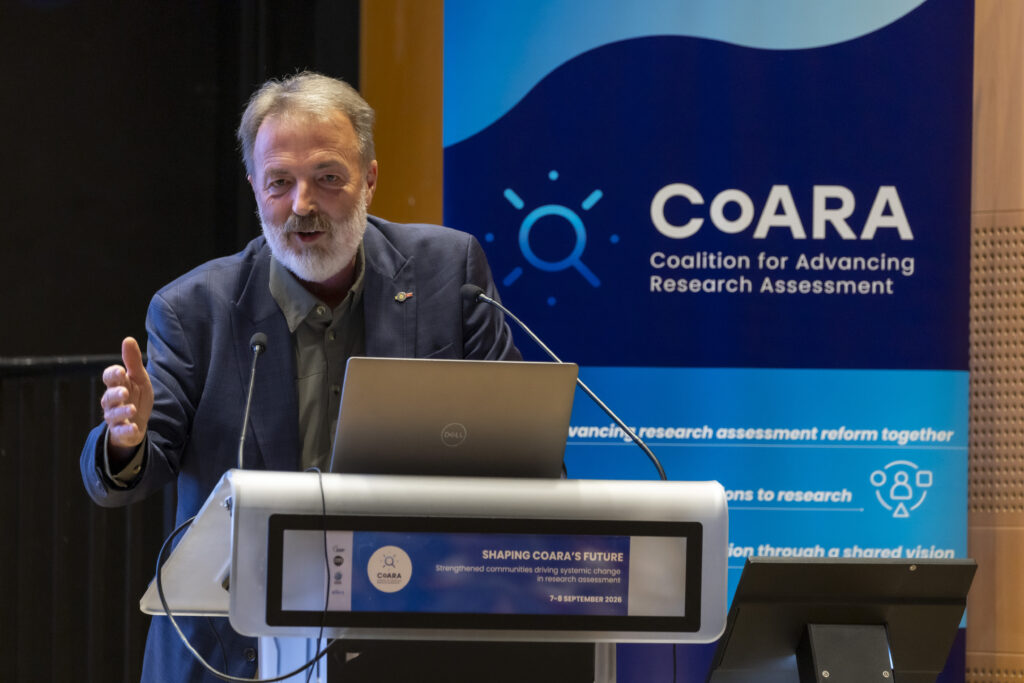
Welcoming both CoARA communities and representatives from the global research assessment reform movement to the conference, opening remarks were presented by CNRS Chairman and CEO, Mr. Thierry Dauxois, President of ALLEA, Prof. Pawel Rowiński, and CoARA Chair, Prof. Dr. Henk Kummeling.
Remarks by Mr. Thierry Dauxois highlighted the connection between Open Science and Research Assessment reform, reaffirming CNRS’ dedication to aligning its Open Science Roadmap with its CoARA Action Plan and fulfilling commitments in practice.
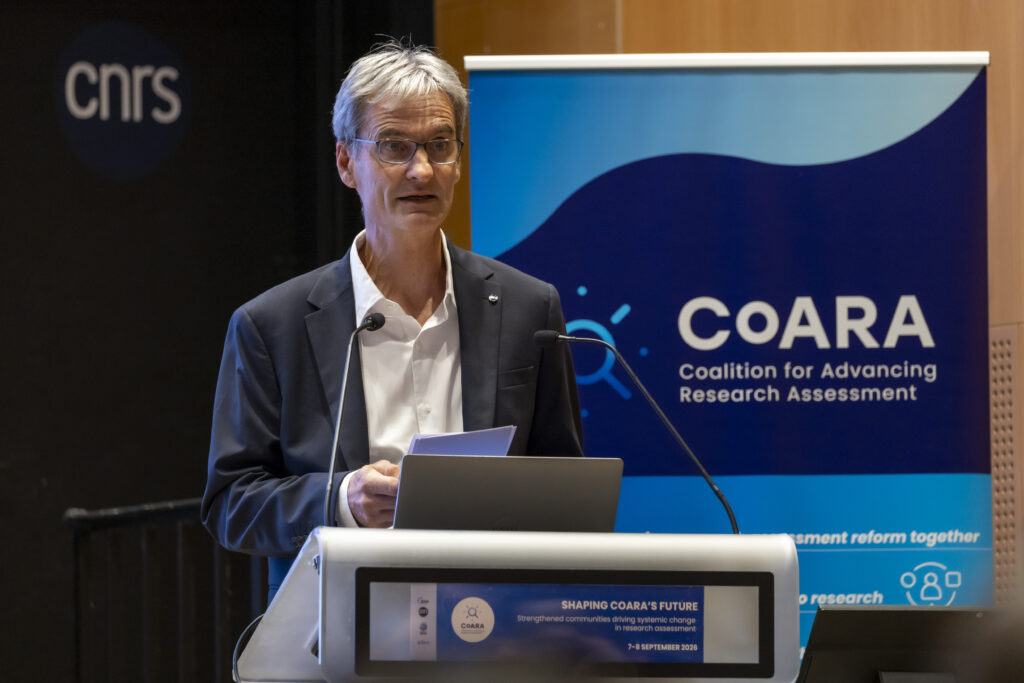
Following these remarks, Prof. Pawel Rowiński, emphasised that the current phase of reform has evolved beyond broad agreement on the need for reform towards how to make change meaningful.
“Institutional commitments alone will not deliver systematic change. That change depends on communities […] willing to learn from one another, challenge established practices and build new ones together. And this is, I believe, where CoARA’s greatest strength lies. It has created not only a framework for reform, but a community capable of carrying that reform forward.”
President of ALLEA, Prof. Pawel Rowiński
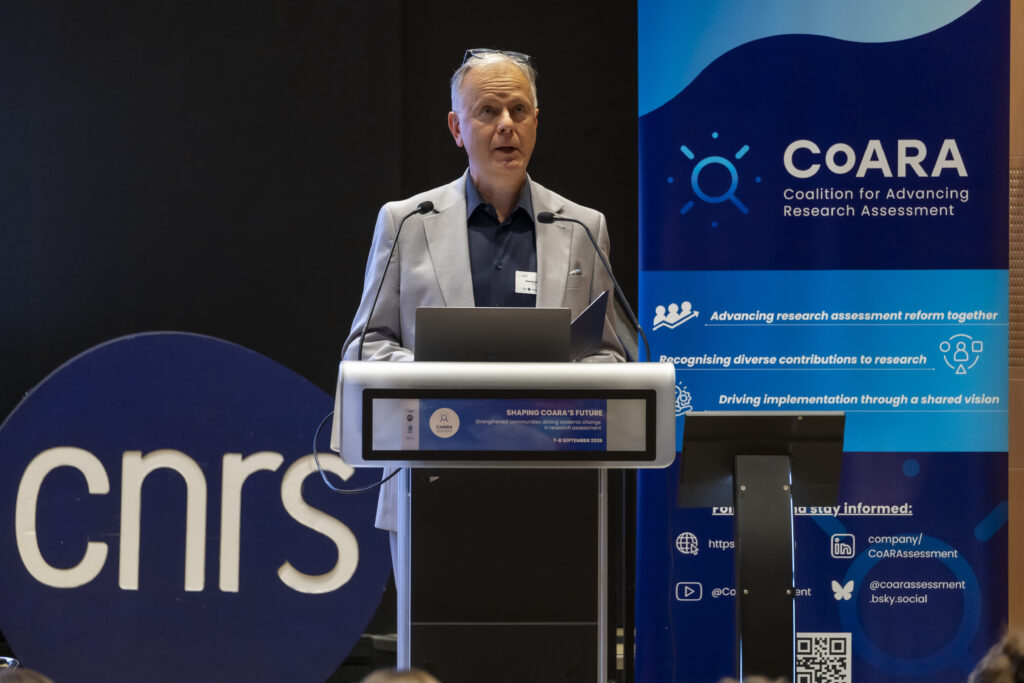
Building on this sentiment, Prof. Henk Kummeling highlighted a central focus for the next phase of CoARA:
“To bridge the gap between principle and practice, transform isolated pilots to scalable solutions, and support institutions in embedding responsible research assessment into their everyday processes and decision-making structure.”
CoARA Chair, Prof. Dr. Henk Kummeling
Research Assessment at a Turning Point
Following the opening remarks, founding members of CoARA joined together in a panel discussion to examine the current state of reform and CoARA’s role in addressing emerging challenges. Panellists included:
- CoARA Vice Chair, Dr. Karen Stroobants
- Mr. Michael Arentoft (European Commission)
- Dr. Lidia Borell-Damián (Science Europe)
- Dr. Vinciane Gaillard (EUA)
- Panel moderated by Mr. Nicolas Walter (ESF)
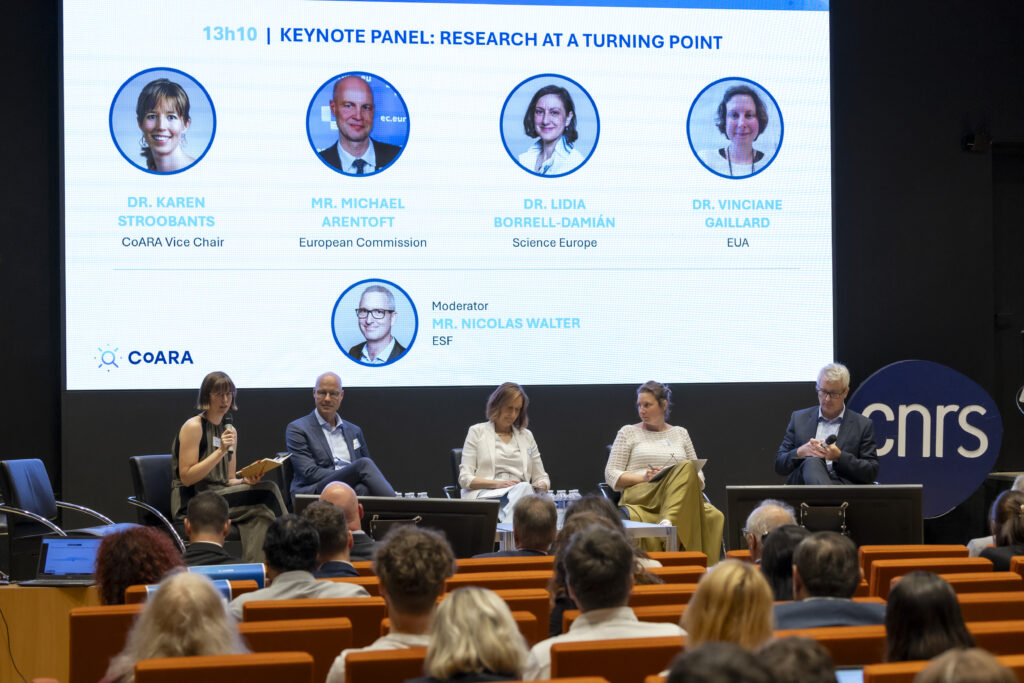
During the session, panellists shared their insights on the evolution of both the reform and the Coalition, highlighting the role of visible support from leadership, as well as buy-in from HR, as key enablers for reform.
“Now we move from individuals towards creating lasting change at the organisational level and, for that, we have to make sure that there is capacity building and empowerment within the institution and that the researchers are recognised for what they do in contributing to making science better and of higher quality.”
Dr. Vinciane Gailliard, EUA
Throughout the discussion, emerging issues such as the potential risks and opportunities in AI were touched upon, as panellists acknowledged the complexity of assessing a high influx of proposals in funding contexts and recognised that rewarding quality peer review becomes even more valuable in the age of AI.
The panel also agreed on the need to further reinforce the connectivity of different actor groups forming CoARA. The complex process of research assessment reform is shaped by the interaction of guidance and tools developed through the lived experience of individuals with policy implementers at the national level and with leaders at the institutional level to drive reform in practice. A unique strength of CoARA lies in bringing these different actors and levels together.
CoARA Communities Driving Change
Embedding Working Group Outputs in Practical Contexts
Shifting focus towards tools and recommendations developed to date, the next block showcased the first outputs produced by Working Groups while examining their practical application for relevant stakeholders, such as within funding and research performing contexts.
The first outputs developed by Working Groups are currently building the foundations for the CoARA Collection. They include, among others:
To learn more about outputs developed to date by CoARA Working Groups, explore our WG Outputs Booklet on Zenodo.
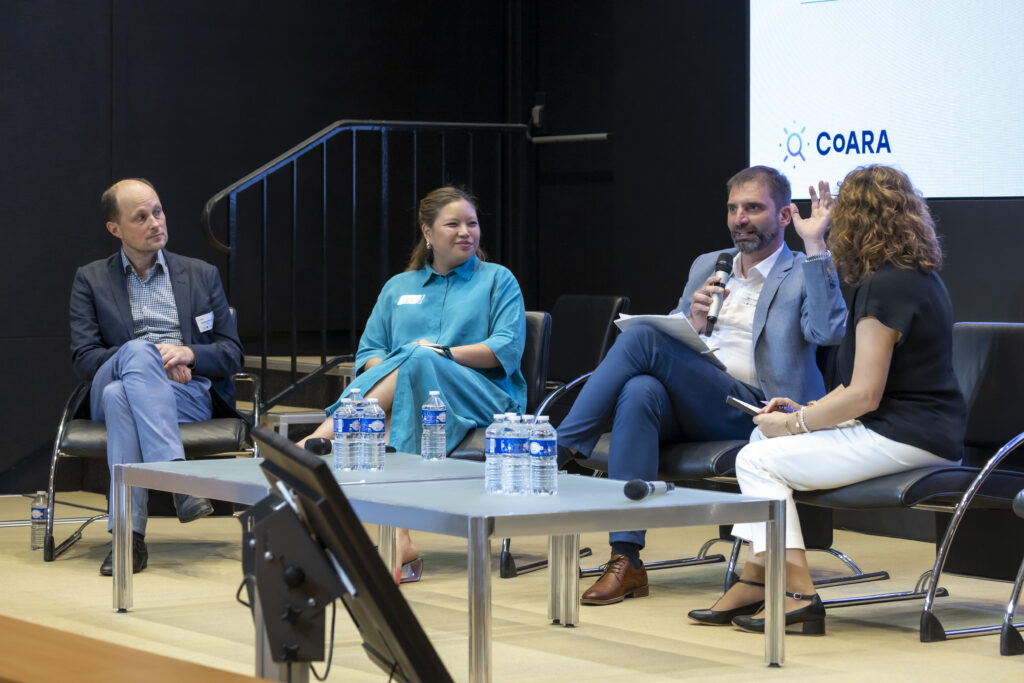
The first group examined recommendations for recognising and rewarding peer review and improving the assessment of proposals within research funding contexts. Panellists included:
- Dr. Matthias Kiesselbach (DFG, WG IPARP)
- Ms. Tung Tung Chan (Erasmus University Rotterdam, WG Peer Review)
- Dr. Klemen Miklavič (ARIS, NC Slovenia)
- Moderated by Ms. Silvia Gómez Recio (YERUN)
The second group examined how to further support experimentation and integrate societal impact as a core criterion within research performing contexts. Panellists included:
- Dr. Teresa Sordé Martí (UAB, WG Towards Transformations)
- Dr. Noémie Aubert Bonn (Hasselt University, WG Experiments)
- Dr. Sylvie Rousset (CNRS, former Steering Board member)
- Moderated by Dr. Mostafa Moonir Shawrav (MCAA)
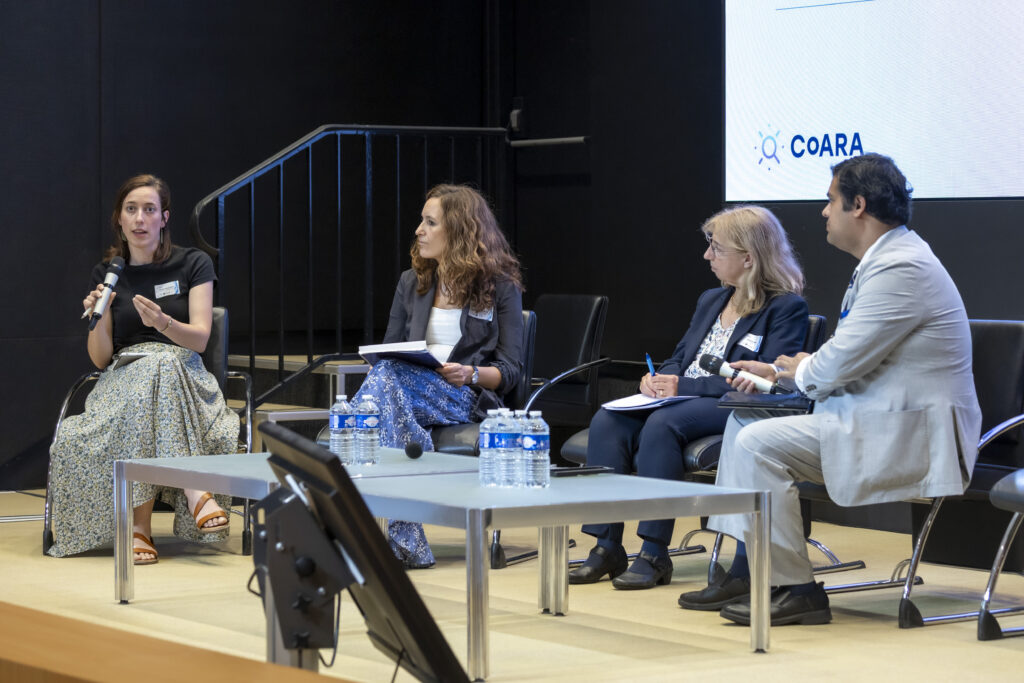
Emerging from the discussions, panellists agreed that a core challenge moving forward as a coalition will be how to effectively connect and upscale often fragmented reform efforts. As noted in the discussions, the next phase of reform requires enhancing capacity for training mechanisms, changing incentive structures, streamlining processes to reduce assessment burdens, and further encouraging institutions to experiment with innovative approaches.
Catalysing Institutional Change through Cascade Funding Projects
Turning to case studies from a selection of Cascade Funding projects, a rich array of experiences was presented across project types and geographic contexts. Presentations during the session were given by:
- Ms. Iva Melinščak Zlodi (University of Zagreb, Pilot project) – click here for the presentation
- Dr. Stefan Riedel (Ruhr Universität Bochum, Teaming project) – click here for the presentation
- Dr. Miriam Kip (Berlin Institute of Health at Charité Berlin, Institutional change project) – click here for the presentation
- Moderated by Prof. Alis Oancea (University of Oxford)
From the projects presented, scalable and transversal tools were highlighted from Teaming and Institutional Change projects. Key outputs included a series of awareness-raising videos produced by the CoARA ExPECT project and the Open MERIT portal by the MERIT-BIH Groups project, which supports researchers, RPOs, and RFOs in building more comprehensive, evidence-based application and assessment systems.
A key takeaway from a pilot project by the University of Zagreb highlighted the central role of aligning national frameworks with institutional processes and treating data quality, governance and organisational capacity as core aspects of responsible assessment.
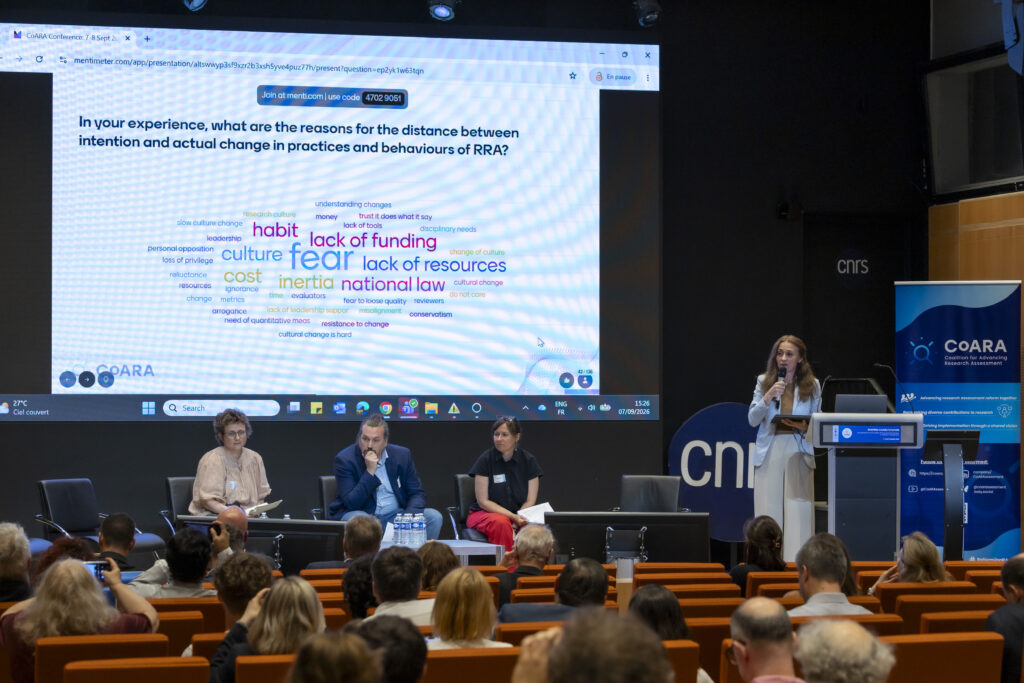
“There’s still fear of being the first explorer and of being the one that implements something new […] and perhaps the most dangerous is that there is a kind of institutionalized economy of fear, which keeps us from doing what we think is right.”
Prof. Alis Oancea, University of Oxford
In order to overcome institutional fear and facilitate broader uptake of innovative approaches, Prof. Alis Oancea noted that CoARA plays an important role in enabling mutual learning and collective capacity to engage with the wider systems and actors that condition institutional change.
Towards Communities of Practice
Discussions throughout the first day highlighted the importance of scaling tools and finding links between efforts to collectively overcome institutional barriers. Looking ahead, to overcome fears and support each other as innovators in the reform movement, a key next step for CoARA will be to strengthen synergies among core implementation groups. A panel discussion explored what forms of communities of practice will be needed in the next phase to better support implementation efforts and mutual exchange. Panellists included:
- Dr. Rita Morais (WG Academic Career Assessment, EUA)
- Prof. Stanislaw Kistryn (CoARA SB, NC Poland, Jagiellonian University)
- Prof. Silvia Penati (WG TIER, University of Milano-Bicocca)
- Moderated by Ms. Krisztina Szepesvári (NC Hungary, HUN-REN)
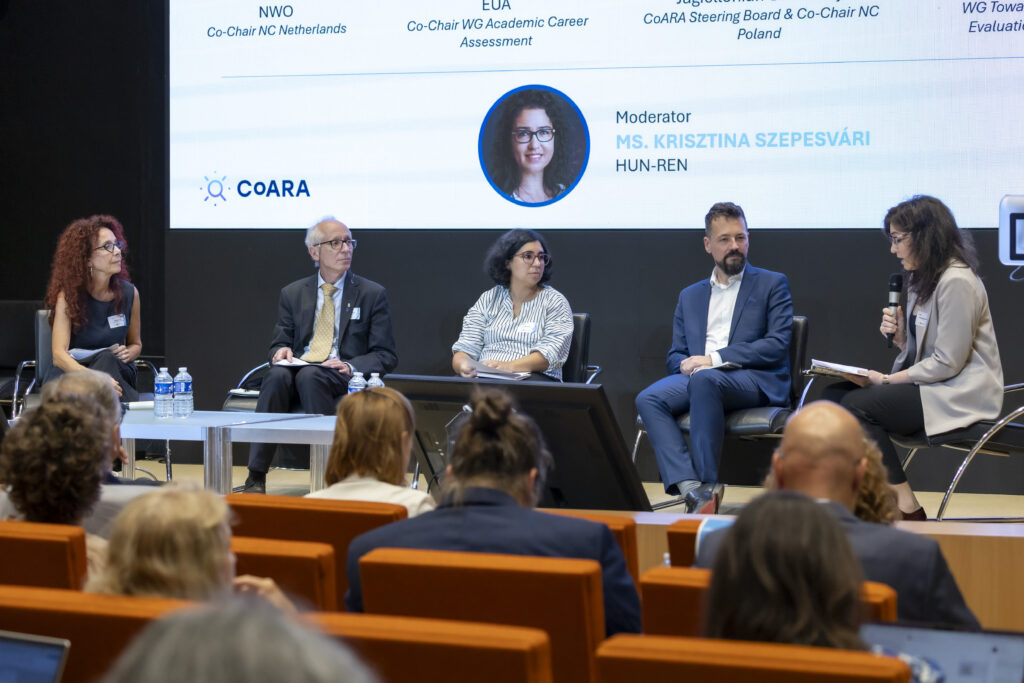
Prof. Silvia Penati highlighted the efforts of the Working Group TIER that launched a local dissemination tour to connect WG TIER’s recommendations and tools with National Chapters through local events, with an aim to further engage ministries on the national level. Dr. Rita Morais also mentioned links already present for career assessment tools between Working Group, National Chapter, and Cascade Funding communities. Learning from case studies like this, panellists agreed that emerging CoPs in the next phase should expand on such existing connections.
With additional support of CoARA’s voluntary sponsorship campaign, Prof. Stanislaw Kistryn, CoARA Steering Board member, also emphasised that financial contributions not only further strengthen a community-owned CoARA but also allow for more opportunities to gather through community exchange events that enhance links between groups.
In concluding remarks, CoARA Vice Chair, Mr. Janne Pölönen, welcomed NWO and EUA as the newest CoARA sponsors.
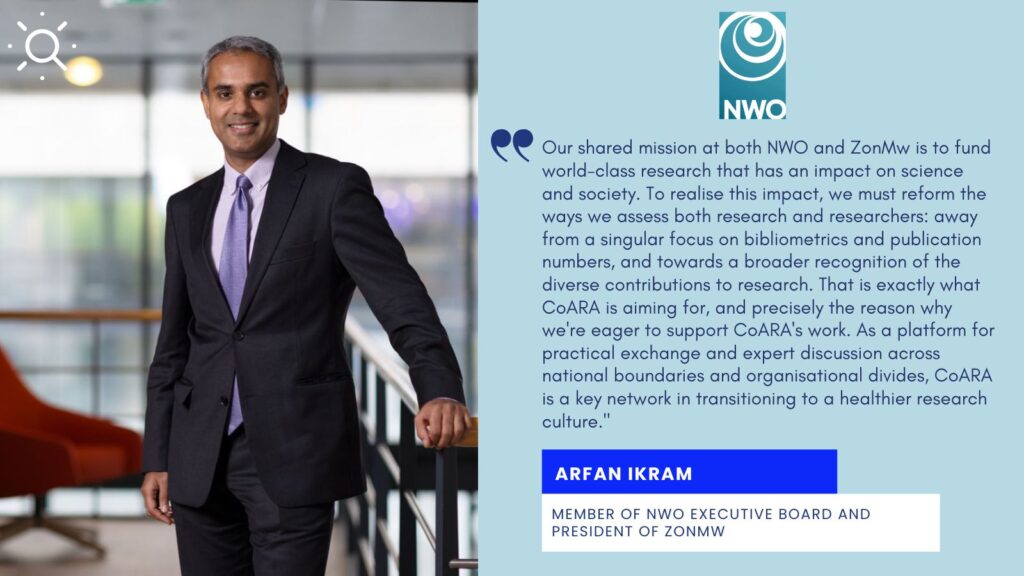
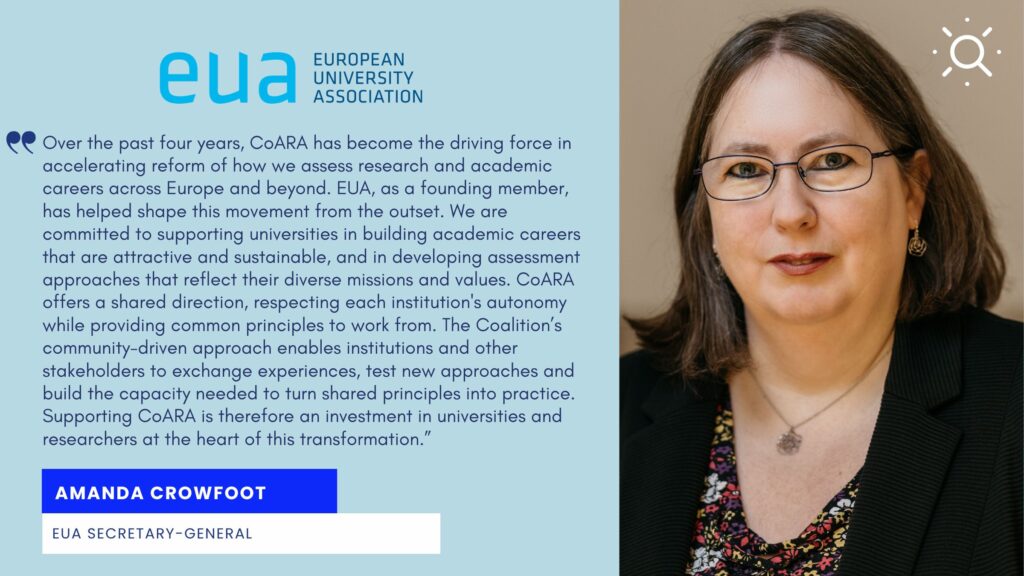
The central role of communities was highlighted by CoARA Vice Chair, Janne Pölönen, in the concluding remarks for the first day:
“Communities are not simply an accessory to reform; they are an implementation mechanism. Reform is complex because institutions cannot simply apply a template. They need practical tools, examples and spaces to share experiences, learn from failures and co-develop adaptations to different career stages, disciplines, missions, and national contexts. That is why communities of practice matter: mutual learning is not just a CoARA activity, but one of its main instruments of change.”
CoARA Vice Chair, Mr. Janne Pölönen
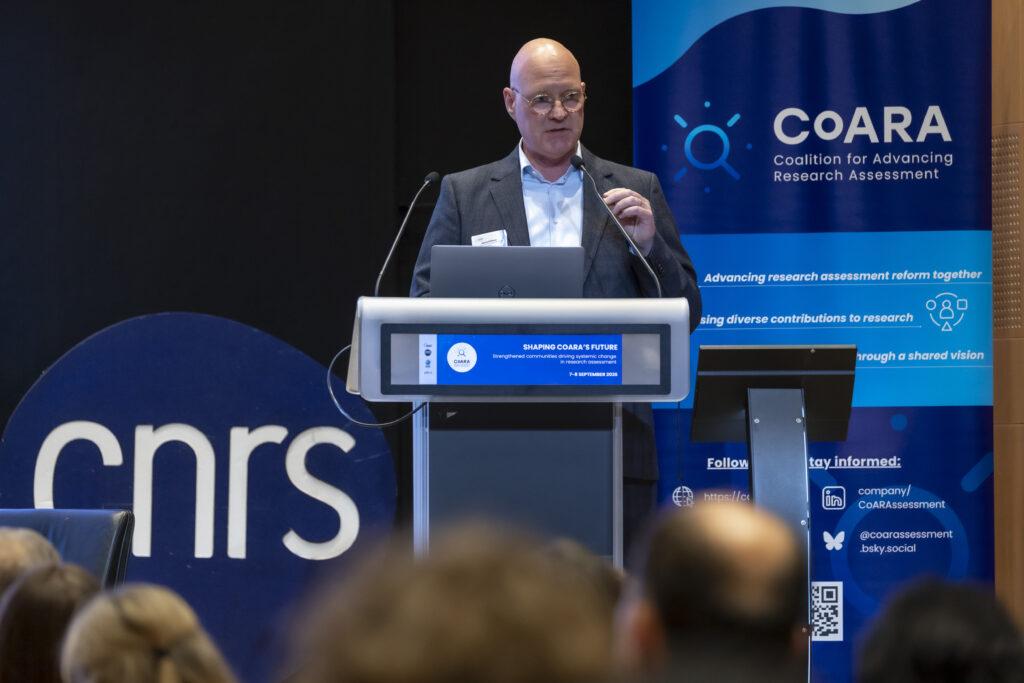
Alignment for Collective Impact
Beyond connecting CoARA’s core implementation communities, the conference also offered a platform to enhance implementation among CoARA’s wider membership and with partner initiatives advancing research assessment reform on a global scale.
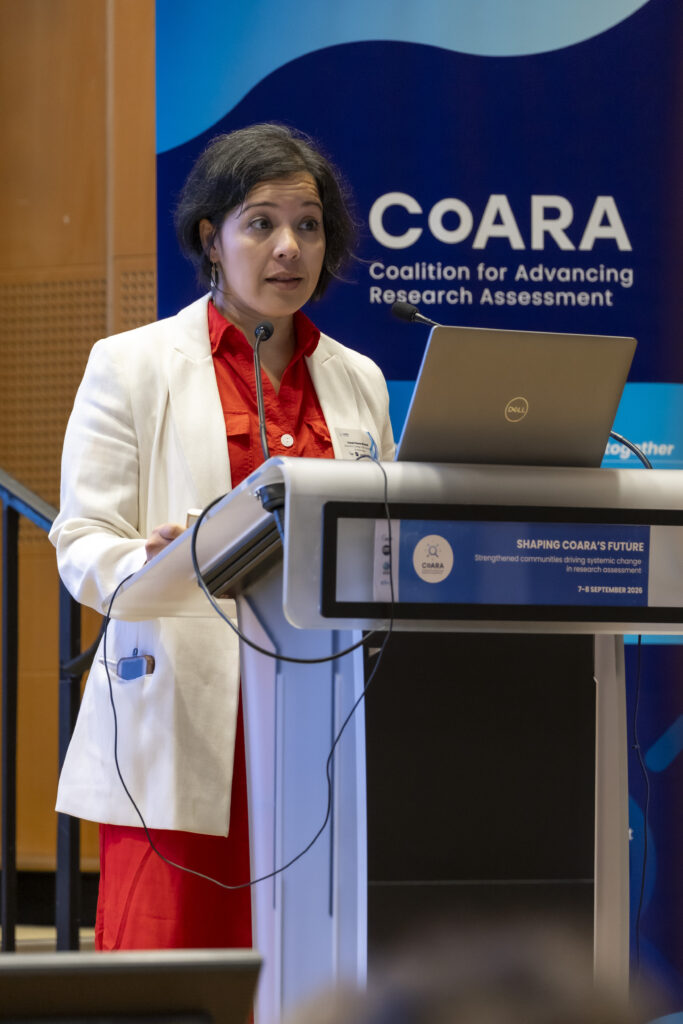
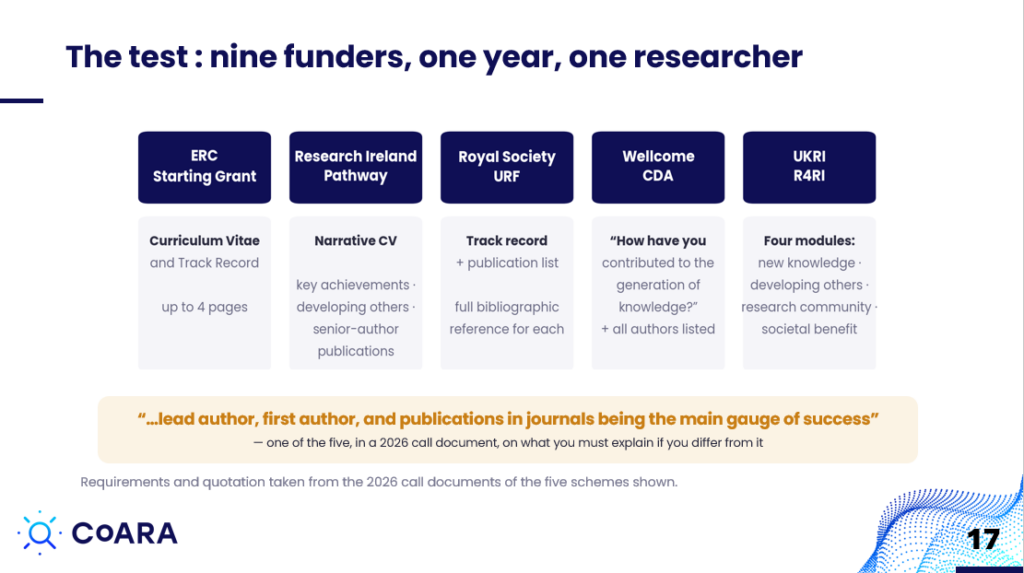
In the welcome address on Day 2 of the conference, Dr. Yensi Flores Bueso reflected on some of the key enablers for systemic change, drawing on her experience as an early-career researcher. While acknowledging there has been clear progress made, with funders increasingly recognising qualitative contributions, she also noted that the challenge remains to foster greater coordination and alignment for qualitative assessments in order to reduce assessment burdens for individual researchers.
“We have proved that reform can be built. The question is whether it can be carried.”
Dr. Yensi Flores Bueso, Global Young Academy
Insights from Action Plan Analyses
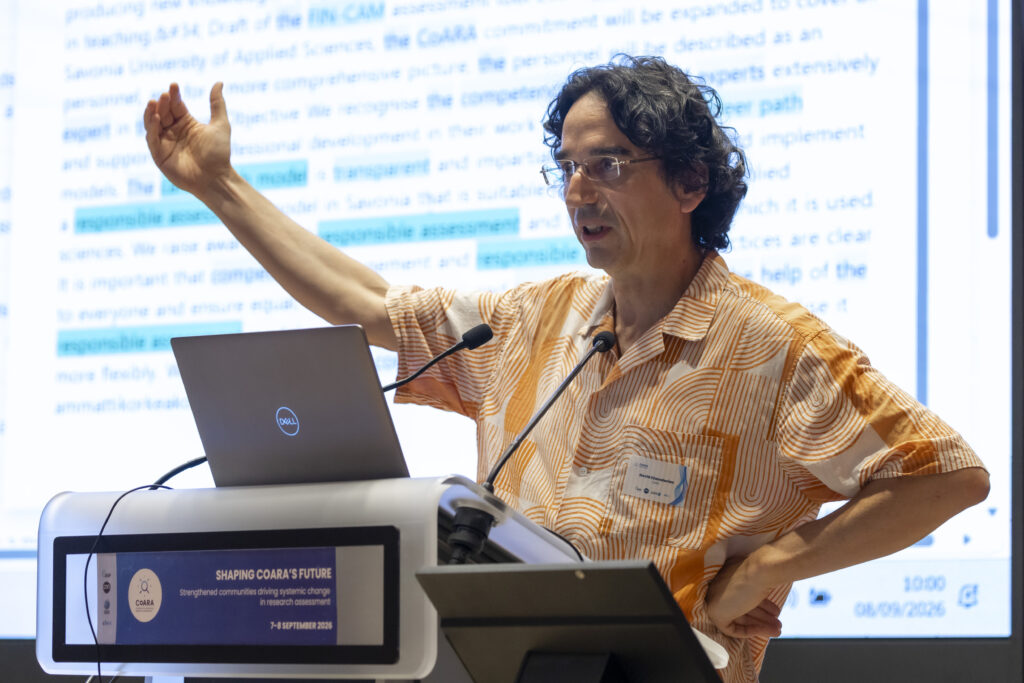
To further explore how to sustain reform and carry implementation forward, the first half of the day offered a deep dive into the current trends in Action Plans. A demonstration by Dr. David Chavalarias guided users on how to create a collaborative, thematic mapping of Action Plans to monitor their evolution overtime. Tools supporting Action Plan analysis and trend mapping, including Lodex and Gargantext, developed by CNRS under the CoARA Boost project, are now available on the CoARA website: www.coara.org/action-plan/action-plans.
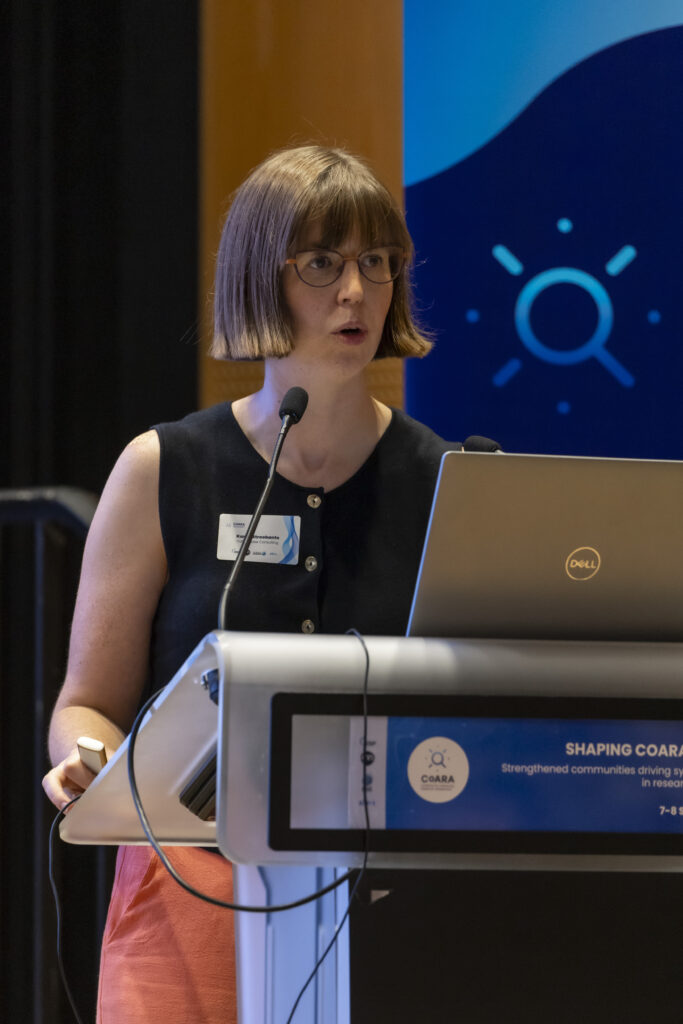
Expanding on the current trends, CoARA Vice Chair, Dr. Karen Stroobants, presented first results from an ARRA Action Plan Analysis. The analysis reveals capacity building as a key starting point for reform journeys and alignment across policy levels as a priority for accelerating reform. As such, the ERA Act introduces an opportunity to address potential misalignment between national and institutional research assessment frameworks. The analysis also demonstrates that research assessment reform functions as an enabler of other ERA priorities including Open Science, gender equality, knowledge valorisation, and strengthening education-, impact-, and innovation-focused career paths.
Expanding global engagement
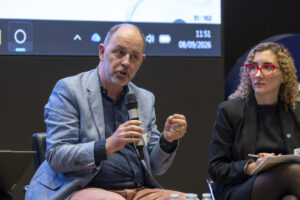
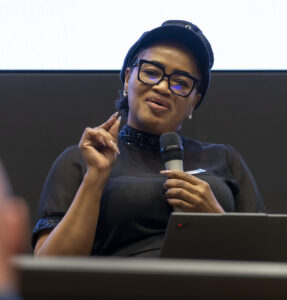
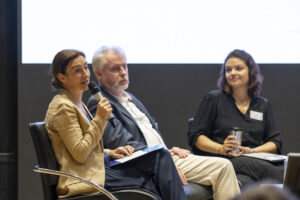
In order to strengthen the impact of the reform movement both within and beyond Europe, alignment among related initiatives is crucial for carrying momentum forward. Expanding beyond the CoARA community, the conference also offered an opportunity to engage with representatives from fellow research assessment initiatives operating on a global scale. Opportunities to expand alignment between initiatives were explored in a panel discussion with representatives from:
- Dr. Giovanna Lima (DORA)
- Dr. Daniela Perrotta (FOLEC-CLACSO)
- Dr. Frédéric Sgard (OECD)
- Ms. Kornelia Tzinova (UNESCO)
- Ms. Nosisa Dube (GRC)
- Prof. Cameron Neylon (CoARA Steering Board)
- Moderated by Dr. James Morris (Science Europe) and Ms. Maria Ronald (ALLEA)
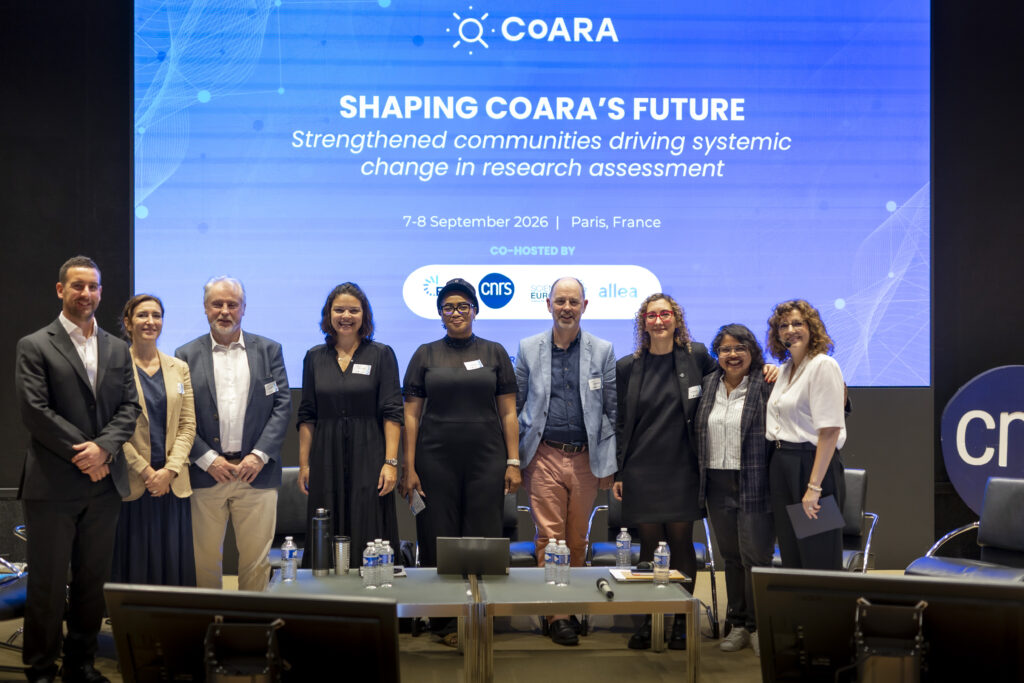
The discussion focused on how to build genuine alignment and complementarity with adjacent reform movements, rather than duplicating efforts. A series of useful outputs were shared during the presentation, including:
- DORA’s Practical Guides to Implementing Responsible Research Assessment
- OECD Policy Brief on Reforming Research Assessment for Better Science
- GRC Dimensions of Responsible Research Assessment
- Bogotá Manifesto: Towards an open, democratic and socially relevant science in Latin America and the Caribbean
- UNESCO Recommendation on Open Science
Prof. Cameron Neylon, a member of the CoARA Steering Board, highlighted that enhanced global alignment is also crucial for building trust in the reform movement on a wider scale. Panellists reinforced the importance of global coordination with flexibility for local adaptation as a priority for the reform movement.
“Responsible assessment requires responsible contextualisation.”
Dr. Daniela Perrotta, FOLEC-CLACSO
The Role of CoARA National Chapters as Connectors
Following the panel discussion on enhancing global alignment, presentations from National Chapters emphasised the importance of translating principles and tailoring tools through the lens of localised perspectives. Examples from Norway, Ireland, Hungary, and the Czech Republic offered a diversity of approaches, while highlighting the role of chapters to form a critical mass of relevant stakeholders. Presentations were given by:
- Mr. Ragnar Lie (NC Norway, Universities Norway) – click here for the presentation
- Dr. David O’Connell (NC Ireland, University College Cork) – click here for the presentation
- Ms. Krisztina Szepesvári (NC Hungary, HUN-REN) – click here for the presentation
- Mr. Michal Petr (Czech Republic, Masaryk University) – click here for the presentation
- Moderated by Prof. Fabien Borget (NC France, Aix Marseille Université)
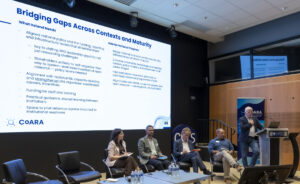
Moving forward, increased dialogue between National Chapter Co-Chairs and the ERA Forum will play an important role in ensuring effective alignment between national policies, funding requirements, and institutional practices. The ERA Act offers an opportunity to address some of these interdependencies and the barriers associated with them. In the next phase of CoARA, National Chapters will be further strengthened as interfaces between institutions, policy actors, and reform processes.
Looking Ahead: A New Phase for CoARA
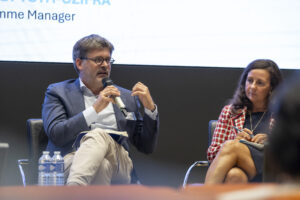
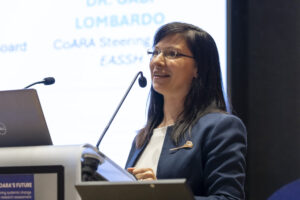
The conference concluded with a final panel with members of the CoARA Steering Board exploring the future vision of the coalition and key priorities for 2027-2030. Panellists included:
- CoARA Chair, Prof. Dr. Henk Kummeling
- CoARA Vice Chair, Mr. Janne Pölönen
- Dr. Irene Ramos-Vielba (CoARA SB, ANECA)
- Mr. Hans de Jonge (CoARA SB, NWO)
- Dr. Gabi Lombardo (CoARA SB, EASSH)
- Moderated by Dr. Erzsébet Tóth-Czifra (CoARA Programme Manager, ESF)
As highlighted during the panel session, this next phase will see targeted and intensified support to ARRA signatories in translating of their commitments into everyday assessment practices, increased connectivity between key implementation groups, and strengthened sustainability and community ownership of the CoARA. Investing in monitoring, self-assessment and evidence-informed learning will serve as a backbone for all these priorities.
Concluding the two-day event, CoARA Chair, Prof. Dr. Henk Kummeling, underscored the collective dedication that has laid the foundations for the movement:
“We, as actors in the rich, complex ecosystem of both the CoARA community and the global research community as a whole, have a dedicated role to play in ensuring that we continue to support research and researchers by recognising diversity, continuing to experiment and share best practices to build frameworks that use relevant criteria, and foster transparency. In this respect, we are all leaders.”
CoARA Chair, Prof. Henk Kummeling
The conference demonstrated the strength of our collective efforts and the crucial role of creating links between them, as CoARA moves into its next phase to carry reform forward into lasting, systemic change.
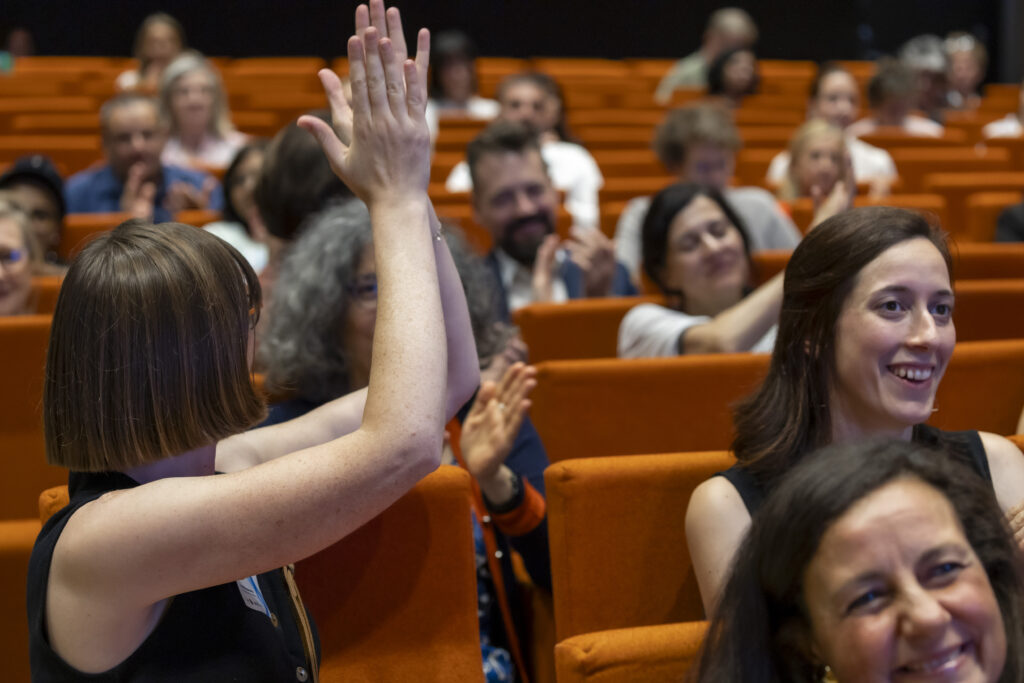
A big thank you to all of our wonderful speakers, moderators, and participants both in-person and online whose valuable contributions made the event truly memorable. A special thanks to our co-hosts from CNRS, Science Europe, and ALLEA, as well as all of our Boost project partners, including: YERUN, MCAA, HUN-REN, CRAC-VITAE, and ANVUR!
Learn more about the conference and key project outputs at the following links: