CoARA Working Group Co-Chair Forum in Graz: “Mission, impact, and legacy”
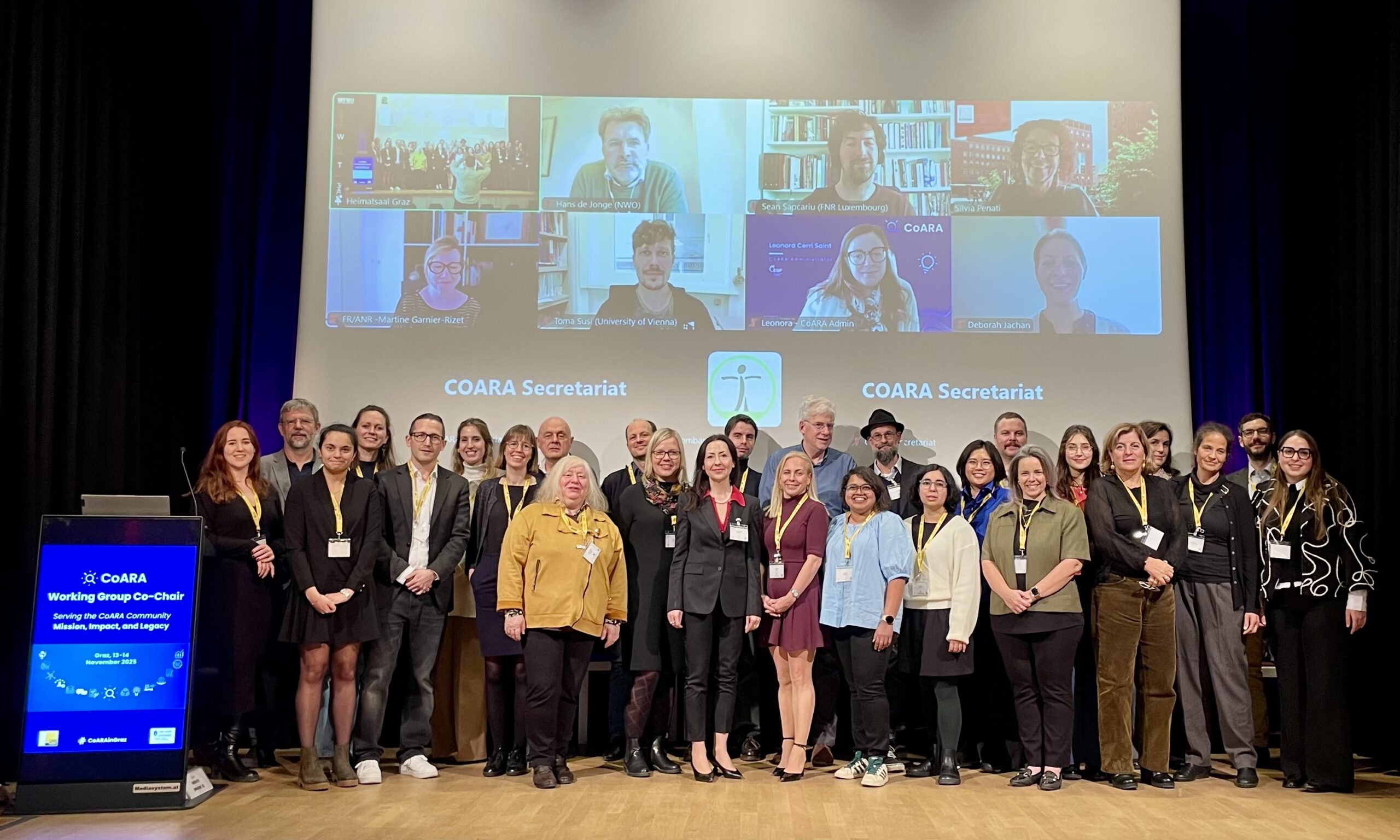
On 13-14 November 2025, CoARA Working Group Co-Chairs gathered in Graz, Austria for a hybrid forum co-hosted by the University of Graz. Under the theme, “Serving the CoARA Community: Working Groups’ Mission, Impact, and Legacy,” the forum focused on a set of interconnected objectives, including:
- Reflecting on mission and impact: WG Co-Chairs shared insights on their ambitions at their respective starting points and reflected on the development of their current outputs, as well as the evolution of their Working Groups (WGs) since their initial launch.
- Strengthening dissemination and communication: The forum addressed how WG outputs can best reach and serve the broader CoARA community, stressing the importance for accessible formats and clear channels for internal and external communication.
- Building sustainability and legacy: WG Co-Chairs explored how WGs can extend as communities beyond their formal two-year terms and how to build a lasting legacy by fostering strong relationships with other CoARA communities.
CoARA Working Groups: Mission, Impact, and Legacy
“This is a movement in progress, and this is a great space to make a change.”
– Prof. Katarzyna Nawrot, Co-Chair of the CoARA Working Group for Responsible Metrics and Indicators (RMI)
In a milestone year for CoARA, in which the coalition celebrates its third anniversary, the first wave of Working Groups begin dissemination of the outputs they developed in the past two years, providing tools for the implementation of research assessment reform across key topical streams. These tools will soon be available on the CoARA website under the “CoARA Collection,” currently in development.
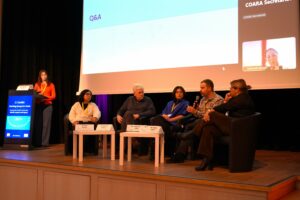
Dr. Rita Morais (WG Co-Chair ACA), Francis P. Crawley (WG Co-Chair ERIP), Dr. Tung Tung Chan (WG Co-Chair Recognizing and Rewarding Peer Review), Dr. Michael L. Moser (WG Co-Chair Towards Transformations), Natalia Manola (WG Co-Chair OI4RRA)
As the first wave reaches the end of their mandates, the forum fostered mutual exchange that crosslinked efforts across different Working Group streams and also provided lessons learned for WGs continuing or extending their mandates. The forum also offered a moment to offer guidance to and welcome the newest Working Group, WG TURN – Thinking Critically about University Rankings Network, that launched in autumn 2025.
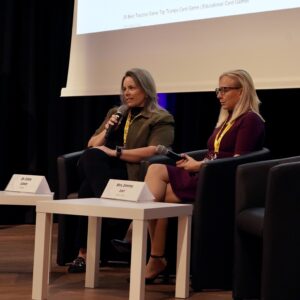
Dr. Erica Conte, Co-Chair of WG TURN and Emma Day, Co-Chair of WG EMCRs
A key theme that emerged from the discussions across the two-day forum was the need for enhanced coordination across CoARA communities. Participants stressed the need for greater mutual exchange among Working Groups across different topics, as well as for leveraging relationships with National Chapters to advance efforts within regional and national contexts. The conference also offered a moment for connection with CoARA members in Austria, as the University of Graz hosted a side event with Austrian members and interested institutions to discuss research assessment reform within the national context of Austria.
Prof. Joachim Reidl, Vice Rector of the University of Graz
Pathways to Working Group Legacy
Kicking off the first day of the forum, opening remarks were given by keynote speakers from Austria with introductory remarks offered by Prof. Joachim Reidl, Vice Rector of the University of Graz, followed by a presentation from former CoARA Steering Board member, Dr. Toma Susi, on perspectives on research assessment reform in Austria. Please click here for the presentation by Dr. Toma Susi on research assessment reform from the Austrian perspective.
After the introductory presentations on the Austrian perspective and welcoming remarks, CoARA Vice Chair, Dr. Karen Stroobants, shifted the focus towards the pathways to Working Groups’ legacy and next steps and highlighted that the first wave of Working Groups delivered substantial outputs despite significant challenges.
“The Working Groups have largely relied on voluntary contributions, and the first wave was launched during CoARA’s early days, amid growing pains and a shifting context that placed increasing demands on volunteers’ time. What I’m most proud of is the dedication of those involved: they maintained momentum and delivered rich insights and tools despite these challenges, showing great patience with both the Secretariat and Steering Board who faced their own challenges. I believe their outputs will be instrumental in translating the ARRA’s direction into practical tools, and I’m eager to see them progress through the endorsement process.”
– Dr. Karen Stroobants, CoARA Vice Chair
Notable Working Group Outputs
Across the two-day forum, Working Group Co-Chairs presented their progress to date and current outputs, sharing challenges and achievements of each WG, with presentations by:
Working Groups whose mandates ended in 2025:
- WG SAGA – Supporting the Alignment of Research Assessment Systems with CoARA in Biomedical Disciplines Through Administrative Reforms and Governance: Dr. Deborah JACHAN
- WG Multilingualism and Language Biases: Dr. Gian Maria GRECO and Dr. Martine GARNIER-RIZET
- WG RMI – Responsible Metrics and Indicators: Pr. Katarzyna NAWROT
- WG Improving Practices in the Assessment of Research Proposals: Dr. Matthias KIESSELBACH
- WG Recognizing and Rewarding Peer Review: Dr. Tung Tung CHAN
- WG OI4RRA – Towards Open Infrastructure for Responsible Research Assessment: Natalia MANOLA
- WG Towards Transformation: Transdisciplinarity, Applied/Practice-Based Research, and Impacts: Dr. Michael L. Moser
- WG ACA – Reforming Academic Career Assessment: Dr. Rita MORAIS
Working Groups whose mandates end in February 2026:
- WG SSH – Social Sciences and Humanities: Dr. Michael OCHSNER
- WG ERIP – Ethics and Research Integrity Policy: Francis P. CRAWLEY
Working Groups extended to September 2026 from the 2nd Call:
- WG TIER – Towards and Inclusive Evaluation of Research: Pr. Silvia PENATI
- WG Experiments in Assessment: Sean Sapcariu
- WG EMCRs – Early-and-Mid-Career Researchers: Emma Day
New Working Group from the 2nd Call:
- WG TURN – Thinking Critically about University Rankings Network: Dr. Erica Conte
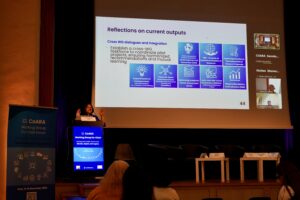
Dr. Tung Tung CHAN, Co-Chair of Recognizing and Rewarding Peer Review
As the first wave of Working Groups conclude, their outputs serve as the foundation of the upcoming CoARA Collection currently in development, which will host practical tools to facilitate the implementation of research assessment reform. To date, several Working Groups have already contributed useful resources on CoARA’s dedicated Zenodo community and the first series of outputs have now been submitted through the Endorsement Framework that was adopted in June 2025 to build consensus around practical tools that advance reform.
The WG Towards Transformations subgroup on Societal Impacts submitted the first evidence review output endorsed by the CoARA Community in the autumn of 2025, titled, “Transformative Research Assessment: Integrating Societal Impacts into Evaluation Frameworks.” The methodology, aims, and outcomes of the white paper were also featured in CoARA’s recent Spotlight series. Click here to watch the video and learn more!
In addition, WG Multilingualism and Language Biases is currently in the final stages of the endorsement process for its actionable tool output, “Implementation proposal for language-aware assessments.” Other groups have recently launched the endorsement process for their outputs, including WG OI4RRA’s “Conceptual Architecture for the Implementation of a Responsible Research Assessment Framework Built on Open Infrastructures.”
While many Working Groups have not yet submitted their outputs for endorsement, many tools and resources are already available to the CoARA Working Group Zenodo community and others are currently entering or finalising their community consultation phases to offer tools that best serve the communities that will use them. For instance, WG SAGA is currently developing an action plan template focused on admin, science management, and governance, as well as an implementation guide for biomedical research assessment.
Other notable examples from Working Groups whose mandates ended this year include WG ERIP’s “Whitepaper on reforming research assessment for a digital and AI-driven science future,” WG ACA’s “Rethinking academic career assessment – Lessons and tools for reform,” WG Recognizing and Rewarding Peer Review’s “Recommendations,” and WG RMI’s “Survey Guide,” to name a few. We look forward to further developing the rich pool of resources in the CoARA Collection and to sharing useful, interactive tools that will help guide reform journeys on key topics.
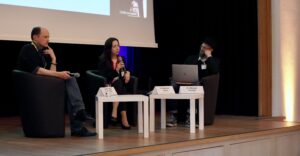
Dr. Matthias Kiesselbach, Co-Chair of WG Improving Practices, Prof. Katarzyna Nawrot, Co-Chair of WG RMI, Dr. Michael Ochsner, Co-Chair of WG SSH
“We’re moving away from fake objectivity towards something better.”
Dr. Matthias Kiesselbach, Co-Chair of WG Improving Practices in the Assessment of Research Proposals
As Working Groups transform and evolve, this sentiment captures both the promise and the work underway across CoARA’s Working Groups and the reform movement more broadly.
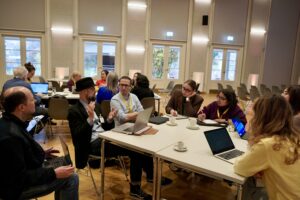
Discussions that emerged over the two-day forum further demonstrated the strength of collaboration between groups to collectively brainstorm, problem solve, and offer mutual support for related challenges and opportunities.
Andreas Raggautz, project lead for the Cascade Funding project of the University of Graz, moderated a breakout discussion on day two, and summarised the key takeaways by highlighting the need to:
- Streamline and simplify outputs
- Connect and combine efforts among CoARA communities
- Amplify communication
Flexibility, transparency, and reinforced communication will continue to guide the community as CoARA advances meaningful and sustainable change in research assessment, Stroobants emphasised in her concluding remarks. Through these mechanisms, CoARA’s collective work will continue to translate research assessment reform from principle into practice across Europe.