From Regional Dialogue to National Action: Insights from the CoARA Forums in Budapest
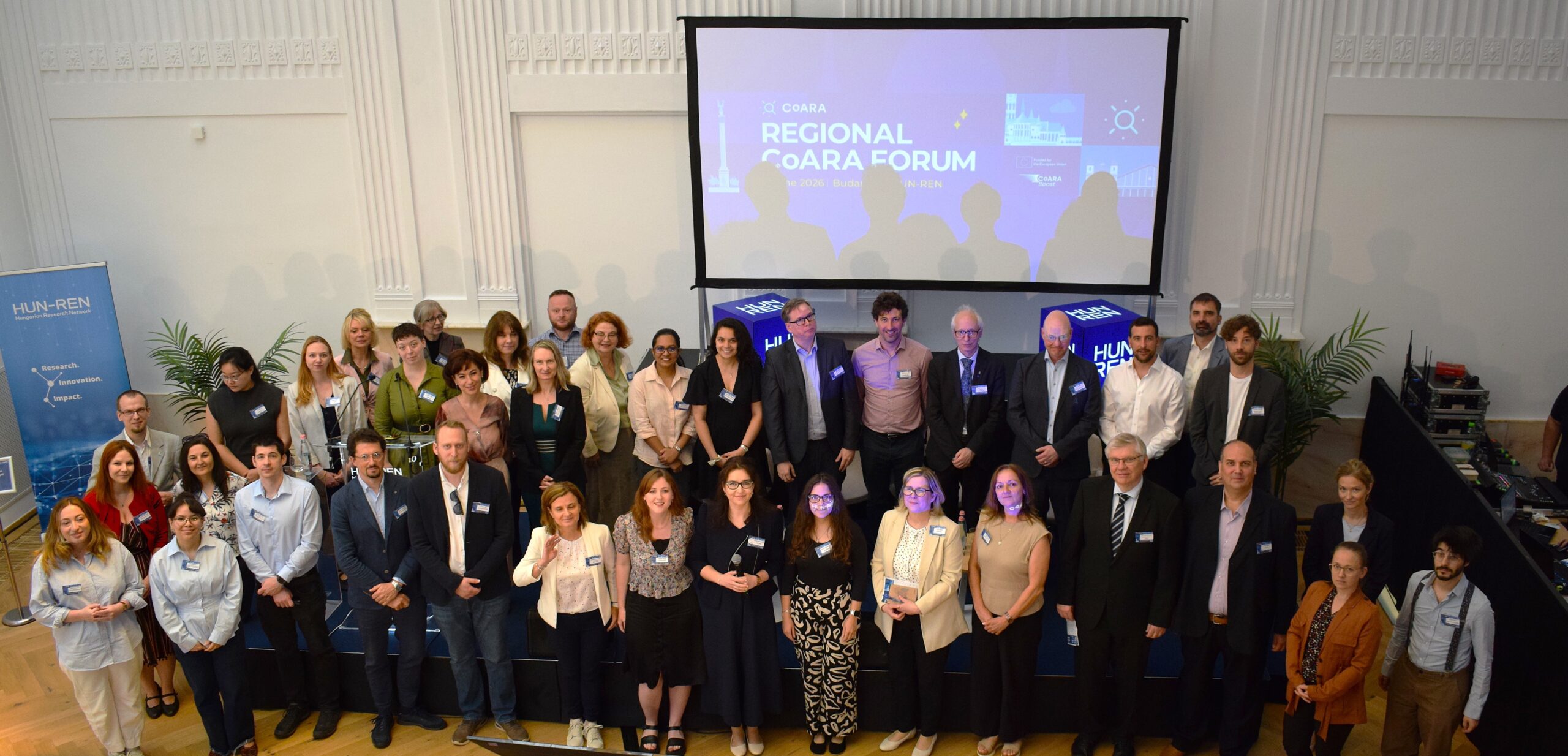
On 2 June 2026, members of the CoARA community joined together in Budapest, Hungary for the CoARA Regional Forum hosted by the Hungarian Research Network (HUN-REN). The forum was facilitated through the CoARA Boost project, funded by the European Union, with coordinating support from Boost partner, Science Europe. Fostering open dialogue on key topics, including research excellence, competitiveness, and multilingualism, the forum explored the state of research assessment reform and CoARA’s role within both Widening and non-Widening contexts. Focusing on the topics of research excellence, competitiveness, and multilingualism through keynote presentations, Q&A sessions, and panel discussions throughout the event, the forum featured expert voices from countries including Hungary, Poland, and Slovenia alongside CoARA members and key stakeholders in the wider research community.
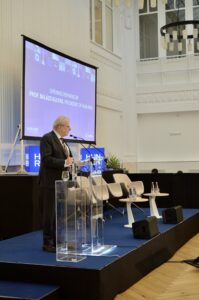
In his opening remarks, HUN-REN President, Prof. Balázs Gulyás, highlighted the importance of sharing regional experiences across the CoARA community and actively contributing to the development of the reform movement, noting that:
“Our region is not simply a recipient of frameworks designed elsewhere, but an active participant in shaping them.”
– Prof. Balázs Gulyás, President of HUN-REN
The opening remarks acknowledge that the Central and Eastern (CEE) region is particularly impacted by the need to expand recognition of quality research beyond English to include a diversity of languages. His remarks also reflected on the “many faces of excellence” and the importance of developing evaluation systems that recognise the full scope of what is meant by excellence in science. Welcoming participants to the forum, Prof. Gulyas acknowledged that CoARA provides the research community with richer, more honest vocabulary for open discussion on how to tackle these important challenges.
Following the opening remarks, the CoARA Regional Forum in Budapest connected with a parallel regional event in Singapore on Advancing Research Assessment Reform in the Asia-Pacific, co-organised by CoARA, DORA, and ALLEA, as a part of the wider Force11 Conference. The ‘Live from Singapore’ reflected a spirit of global collaboration in the wider reform movement and reinforced the importance of sharing regional realities around the world to strengthen our collective mission, as reflected in a comment from CoARA Vice Chair, Janne Pölönen:
“Looking ahead, CoARA will need to further strengthen alignment and collaboration with global initiatives, while deepening engagement and implementation support with organisations already committed to advancing research assessment reform. The CoARA Regional Forum in Budapest, organised by HUN-REN and the CoARA Boost project, showed the great added value of events with both regional and thematic focus.”
– CoARA Vice Chair, Janne Pölönen
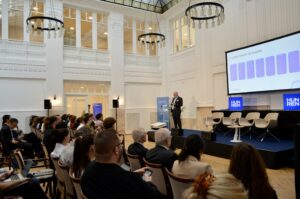
The ‘Live from Singapore’ was then followed by a series of keynote presentations focused on CoARA’s impact with interventions by:
- Janne Pölönen, CoARA Vice Chair and Co-Chair of the CoARA WG Multilingualism (Federation of Finnish Learned Societies)
- Prof. Stanislaw Kistryn, CoARA Steering Board member and Co-Chair of the CoARA Polish National Chapter (Jagellonian University)
- Sean Separciu, Co-Chair of the CoARA WG Experiments in Assessment (Luxembourg National Fund)
The keynote presented by CoARA Vice Chair, Janne Pölönen, highlighted the current uptake of the reform, as well as continued growth and diversification of the CoARA community with over 900 signatories to date, including approximately 25% from the CEE region and 20 total CoARA National Chapters now established. Reflections from Prof. Stanislaw Kistryn underlined the growing role of National Chapters in strengthening implementation, with continued emphasis on the importance of developing Action Plans to support reform at the national level.
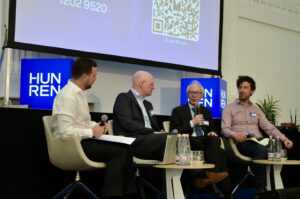
As illustrated in the ongoing work of the Polish National Chapter, keynotes also demonstrated the importance of testing and adapting assessment approaches in different national and institutional settings. The development of a POL-CAM framework, adapting and implementing the NOR-CAM framework within the Polish context, is supporting the recognition of broader contributions of individual researchers.
The value of experimentation and shared learning was further emphasised in the keynote presented by Sean Separciu that showcased the interactive output produced by the Working Group Experiments in Assessment and that was recently endorsed by the CoARA community. The Experiments in Assessment Ideas Catalogue offers a collaborative tool aims at fostering mutual exchange and facilitating the piloting, testing, and scaling of innovative approaches to research assessment practices across contexts.
Defining Excellence
The afternoon session then shifted focus to panel discussions examining the key topics of research excellence and multilingualism.
A keynote presentation, given by Co-Chair of the German National Chapter, Mathijs Vleugel (Helmholtz Open Science Office) presented results from a recent workshop report, “Promoting excellence through research assessment reform,” produced by the German National Chapter.
While scientific excellence has often been perceived in opposition to reform, the report argues that “excellence should be understood as a systemic attribute, which is fostered by the interplay of qualified personnel, supportive organisational structures, and appropriate framework conditions.”
Following the keynote presentation, a panel discussion explored varying definitions and approaches to understanding excellence. In a session moderated by James Morris (Science Europe), panellists included experts from CEE and beyond:
- Cristina Martinez, European Commission
- Mathijs Vleugel, Helmholtz Open Science Office
- Prof. Alicja Józkowicz, Jagiellonian University
- Prof. Dr. László Hunyady, Hungarian Academy of Sciences & HUN-REN Institute of Molecular Life Sciences
- Prof. András Stipsicz, ERC Scientific Council & HUN-REN Alfréd Rényi Institute of Mathematics
- Moderated by James Morris (Science Europe)
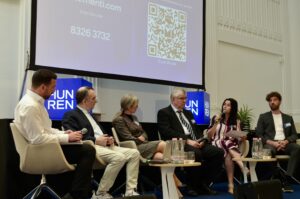
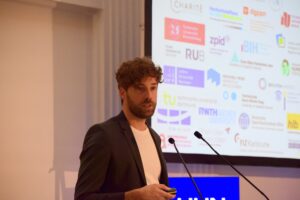
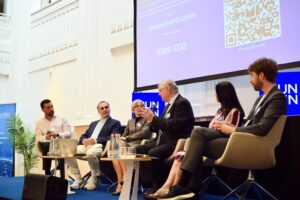
The discussion acknowledged how building solid foundations for good quality science enables excellent research to thrive. Discussions also explored the different forms of excellence from individual to institutional levels, and broadening the concept to acknowledge context, field-specific, and mission-based forms of excellence. Interventions from Cristina Martinez also highlighted how the multifaceted aspects of excellence are being reflected in the developing ERA Act proposal that aims to connect definitions of excellence with the ARRA principles. Panellists further highlighted the need to create an assessment of excellence that recognises contributions from team science and societal impact.
Recognising Multilingualism
Building on the discussion of excellence, a keynote presentation offered by Ginevra Peruginelli (National Research Council of Italy – CNR) and Virág Vas (HUN-REN Research Centre for Natural Sciences) provided an in-depth overview of a comparative study that analysed differing experiences conditions for multilingual researchers in Italy and Hungary. The study demonstrated how one dominant language in research leads to the exclusion of quality research in local languages. The keynote underscored how language shapes scientific careers and that addressing language bias is essential for fairer evaluation.
Following the keynote, panellists explored the role of language in shaping visibility and recognition. In a session moderated by Ákos Teslár (Eötvös Loránd University), panellists included:
- Janne Pölönen, CoARA Vice Chair, WG Multilingualism Co-Chair, and Federation of Finnish Learned Societies
- Klemen Miklavic, Slovenian Research Agency (ARIS)
- Ginevra Peruginelli, National Research Council of Italy (CNR)
- Virág Vas, HUN-REN Research Centre for Natural Sciences
- Rafael Schögler, University of Graz
- Moderated by Ákos Teslár (Eötvös Loránd University)
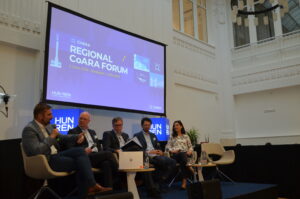
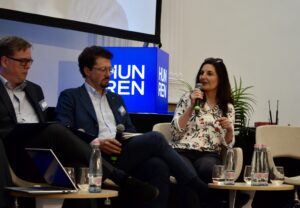
Highlighting both the opportunities and challenges of creating more linguistically inclusive assessment systems, panellists acknowledged how, although English offers a common language that can be useful for collaboration and global exchange, certain regions’ and countries’ contributions are disproportionately left out on the global stage due to language bias. The panel also debated how the use of AI translations may facilitate creating more linguistically diverse peer review processes, but how these language models must be engaged with critically as their inputs and development are not neutral. Rafael Schögler (University of Graz) emphasised the act of translating is itself an act of knowledge production and how translation can both transmit and transform ideas.
Offering tangible guidance to navigate recognising multilingualism in research on a global scale, the endorsed output, “Implementation Proposal for Language-Aware Assessments,” provides a practical resource for institutions to develop linguistically inclusive assessment systems to counteract this important challenge.
Click here to read the endorsed Implementation Proposal, produced by the CoARA Working Group on Multilingualism.
The event concluded with final remarks from CoARA Secretariat Science Officer, Damini Pantaleon, that reflected the importance of national actors to build capacity and foster stronger engagement within the CoARA community. Conferences such as the ones in Budapest and beyond not only bring together leaders and experts in the reform movement, but also act as multipliers to generate regional momentum to help build a shared voice within the CoARA. Recalling key takeaways from the day, Damini Pantaleon noted that, “multilingualism is not a weakness but a bridge between science and society as a driver of communication that must be valued to support the implementation of ARRA.” The closing remarks also acknowledged the contributions of CoARA’s core communities that co-create reform through experimentation and mutual learning in a shared direction: the transition toward a more inclusive, context-aware, and responsible research assessment system.
“The discussions in Budapest reinforced that CoARA relies on deep and active engagement of all of its members, signatories, and members of the academic community who realise the need for research assessment reform. CoARA provides the structures to help organisations implement reform, but lasting change will require continued collaboration and commitment, supported by both European and national decision-makers.”
– Prof. Stanislaw Kistryn, CoARA Steering Board member, CoARA Polish National Chapter Co-Chair, Jagiellonian University
2nd National CoARA Forum of the Hungarian National Chapter
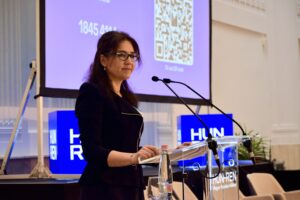
Following the Regional Forum, the Hungarian National Chapter hosted its 2nd National CoARA Forum on 3 June 2026 at HUN-REN headquarters in Budapest. Discussions explored how research assessment reform is being integrated into the Hungarian research landscape, highlighting CoARA not only as a commitment to change but also as a community-building process that connects European principles with national realities. Participants emphasised the role of National Chapters in translating reform into practice through dialogue, shared learning, and adaptation to local contexts.
Building on themes from the previous day, discussions examined how excellence can be recognised more comprehensively, beyond publication metrics alone, and highlighted the importance of supportive research environments, funding, and career pathways. The forum also showcased practical implementation efforts in Hungary, including a HE project outcome, a white paper on systemic approach to reforming responsible research assessment in the region, ongoing reforms to academic evaluation criteria, and discussions on research careers, wellbeing, and gender equity. The event concluded with a proposal to develop a Hungarian research career assessment framework, HUN-CAM, inspired by NOR-CAM, as a collaborative national effort to advance responsible research assessment.
Together, the two forums in Budapest reaffirmed the importance of bringing together diverse perspectives, experiences, and expertise to continually redefine what research assessment reform means and to collectively shape fairer assessment systems that place inclusivity and diversity as drivers that enable excellence and quality to thrive.
Special thank you to the HUN-REN team for their wonderful organisation bringing together national, regional, and expert voices across the research community for these important discussions!