Reflections from Copenhagen: highlights from the side event on “Celebrating 3 Years of CoARA: Collectively Shaping Research Assessment”
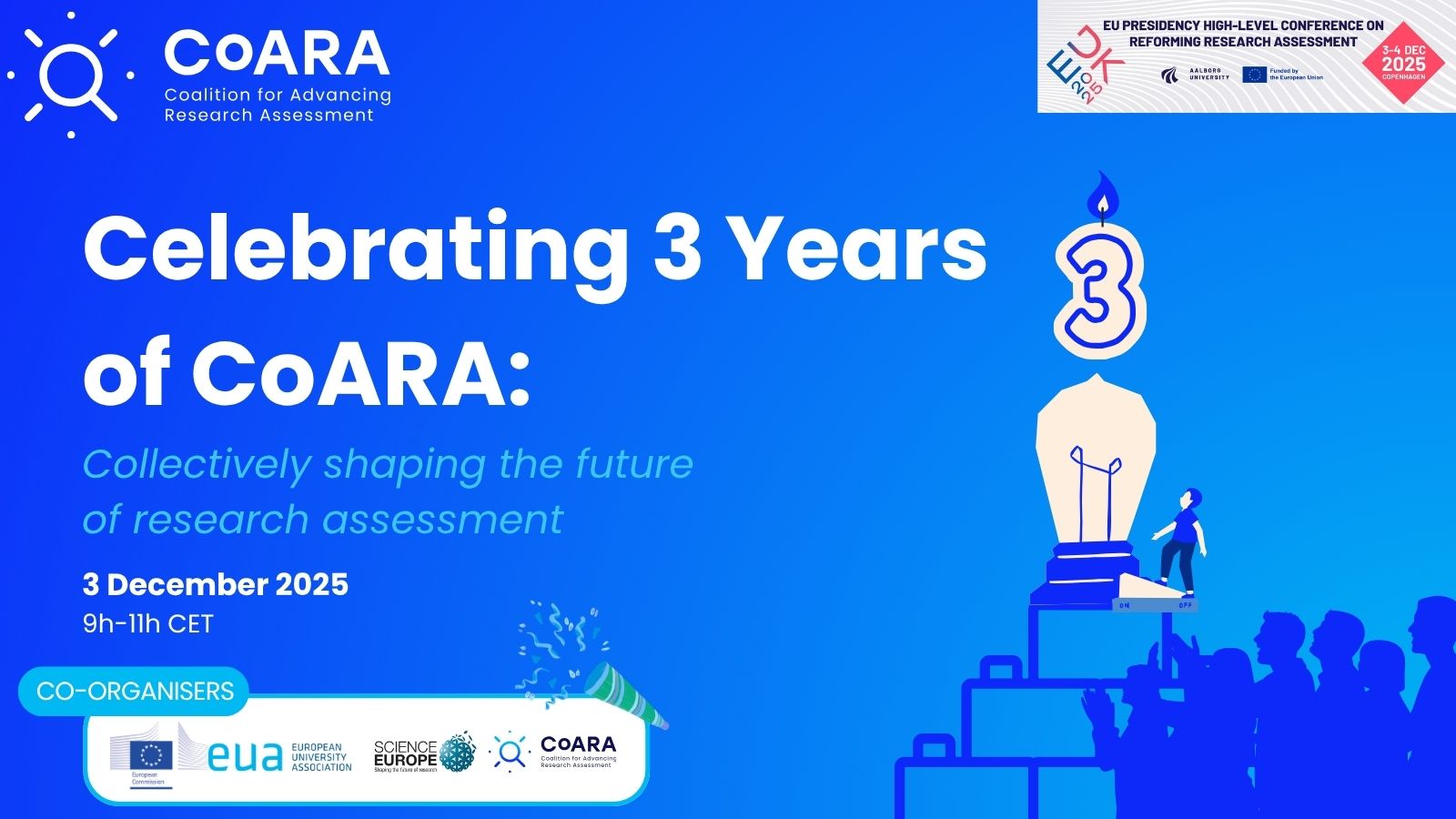
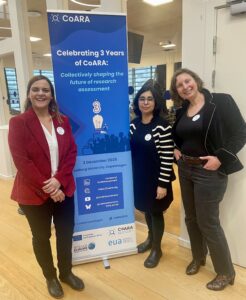
As part of the EU High-Level Presidency Conference on Research Assessment, CoARA hosted a dedicated, hybrid side event on 3 December 2025 at Aalborg University under the theme, “Celebrating Three Years of CoARA: Collectively shaping research assessment reform,” which was co-organised with our partners from Science Europe, the European Universities Association, and the European Commission.
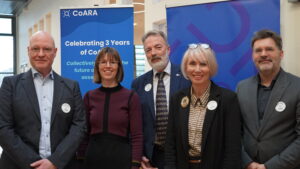
Marking an important milestone for the coalition, the CoARA hybrid side event drew a global audience of nearly 200 participants, with attendees coming from Morocco, South Africa, Poland, Denmark, and more, to celebrate the collective progress achieved to date. What began as a coalition of founding institutions in 2022 has now grown to a coalition of 797 members and 916 signatories.
Opening remarks offered by Dr. Lidia Borrell-Damián, Secretary General of Science Europe, reflected on the history of the coalition that built off of momentum shaped by the previous groundwork laid out by DORA, EUA, Science Europe, and the European Commission, united by a common mission to transition away from an overreliance on quantitative indicators and instead move towards a fairer, inclusive, and responsible system that recognises the diverse contributions of researchers.
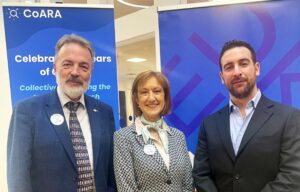
While this common goal remains at the heart of CoARA’s work, Borrell-Damián acknowledged the challenge of translating this ambition into practice akin to “changing the engine of a plane while the plane is still flying.” She stressed that CoARA’s role is to support organisations through this complex shift by providing both the conceptual framework and practical tools to make change sustainable and effective.
These reflections on the coalition’s foundations set the stage for CoARA Chair, Prof. Henk Kummeling, to then shift the focus towards the coalition’s achievements to date and its future direction. “We have grown a lot in the last three years,” he noted, highlighting the practical translation of CoARA principles through the efforts of the Working Groups, National Chapters, Cascade Funding projects, and member institutions’ action plans and their implementation.
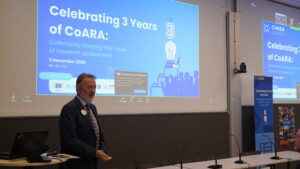
Kummeling highlighted that in this milestone year for CoARA, the first wave of Working Groups has now reached the end of their mandates and are beginning the dissemination of their outputs to provide our community with practical tools for the implementation of reform along specific topical streams. As Working Groups build the foundation for the forthcoming CoARA Collection, Kummeling noted that the growth of the coalition is also evidenced by the expanding network of CoARA National Chapters, which grew from 5 chapters in 2023 to 19 in 2025.
During his presentation, Kummeling proudly welcomed Denmark as the newest CoARA National Chapter, underscoring the momentum building for reform across and beyond Europe. Denmark’s commitment to the reform movement on the national level was further reflected by Dr. Christina Egelund, Danish Minister for Higher Education and Science, during opening remarks at the main conference that called for sustainable assessment approaches tackling challenges like reproducibility while also valuing mentoring, teaching, collaboration.

While celebrating the achievements, efforts, and growth over the past three years, Kummeling stressed that there remains substantial potential for deepening impact. A key priority going forward is strengthening institutional commitment, shifting responsibility from individuals to organisations to ensure sustainability amidst changing leadership.
In the current landscape of rapidly changing technology and geopolitical conditions, a panel discussion then followed Kummeling’s presentation to address the interconnected challenges affecting research assessment. Steering Board member and recently elected Vice Chair, Janne Pölönen, moderated a panel discussion with CoARA Vice Chair Dr. Karen Stroobants, DORA Co-Chair Dr. Kelly Cobey, Dr. Jon Holm from the Research Council of Norway, and Richard Williams from the Technical University of Munich. Three critical issues emerged from the panel discussions, notably, how to navigate the role of AI in research and evaluation, how to define success and redefine research excellence, and how to manage data stewardship within a complex geopolitical landscape.
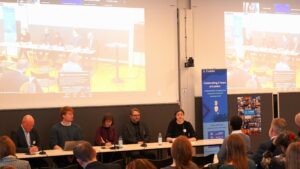
Interventions from Holm identified the potential for AI to identify bias and support peer reviewers, however, transparency remains critical. He posed the challenge, “Does it make sense to run faster if you’re not able to control where you’re going,” highlighting that equitable access to AI tools is also essential. Building off of this, Williams reframed how research assessment should approach data. He emphasised the need to understand data within the communities that produce it, proposing accompanying datasets with context about their journey and appropriate uses.
Cobey then raised a fundamental question, “What is research excellence,” and addressed the gap between how excellence is defined in policy and how researchers actually conduct and disseminate research. She stressed the need to continue strengthening CoARA principles and engage stakeholders on the national and regional levels. Expanding on this message, Stroobants pointed to the flexibility of CoARA’s principles that “serve as a compass” to enable institutions to implement reform in their own contexts without losing the shared vision and direction for reform.
The panel discussions in Copenhagen affirmed that momentum must now translate into coordinated action, which was further reflected in a live Mentimeter session conducted during the side event, engaging both onsite and online participants. Responses from the Mentimeter session identified institutional leadership, complexity of cultural change, the need for practical tools, and the imperative to sustain momentum amid geopolitical and technological uncertainty as key challenges to the reform movement. The consensus around these shared challenges demonstrates the importance of sustained collaboration across diverse organisations driving change.
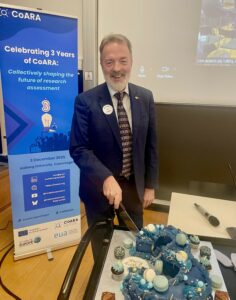
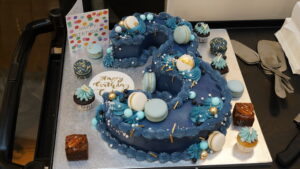
The event provided a unique opportunity for reflection and celebration of the collective progress made in advancing responsible research assessment over CoARA’s first three years. This spirit was captured in the informal exchanges over coffee and birthday cake, where attendees reflected on the journey and penned wishes for the coalition’s future on birthday cards, a tangible recognition of the journey so far and the path ahead.