Highlights from the 3rd National Chapters Exchange Forum in Madrid
3rd National Chapters Exchange Forum
Instruments for Success: National Chapters Driving Diverse Implementation Through a Shared Vision
19-20 March 2026 | Madrid, Spain | Co-hosted by the coordinating group of the Spanish National Chapter
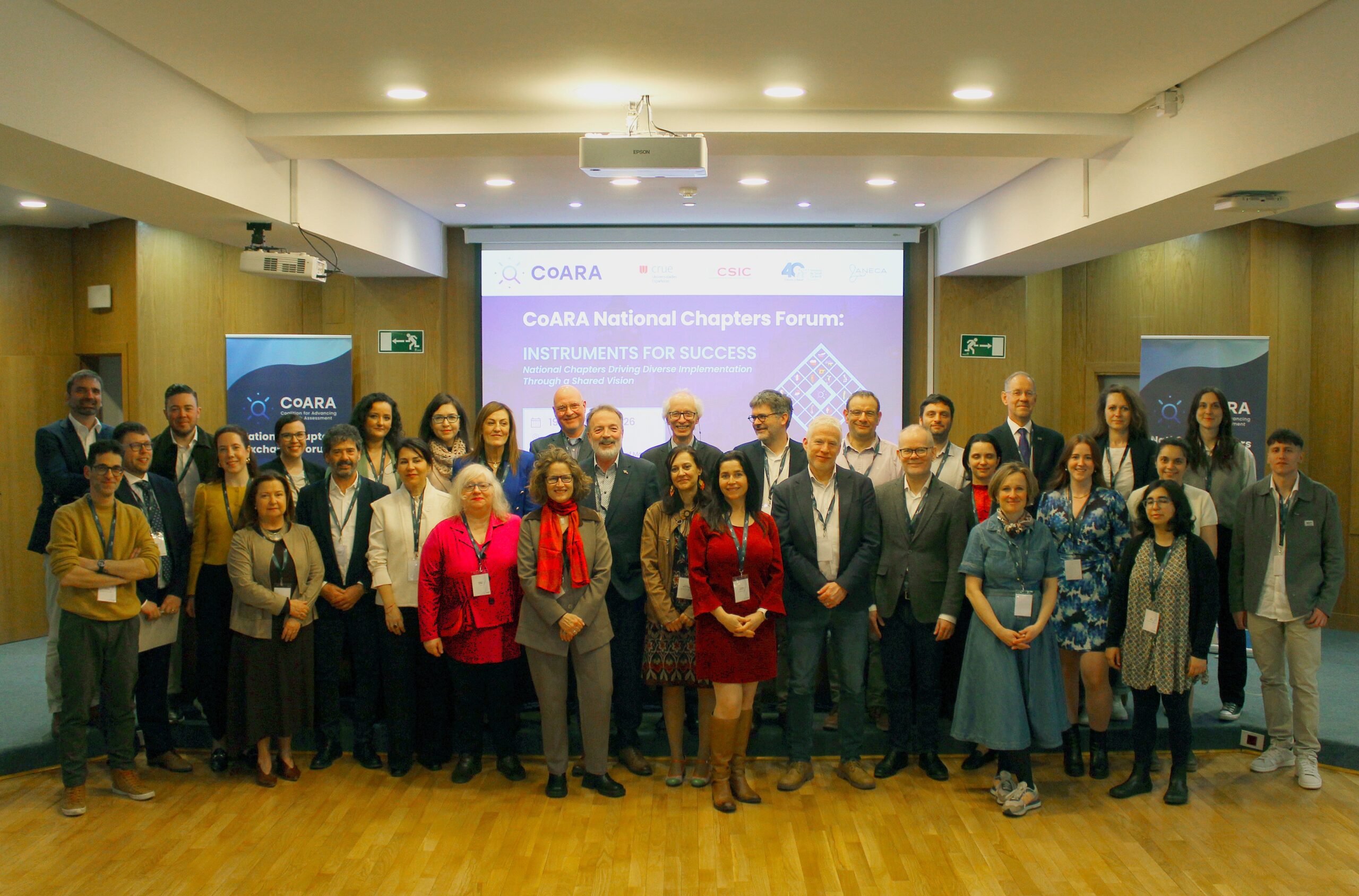
On 19-20 March 2026, National Chapter Co-Chairs representing over 19 countries joined together in Madrid, Spain at the Universidad Complutense de Madrid (UCM) for two days of strategic discussions, keynote presentations, panels, and mutual exchange. Co-hosted by the coordinating group of the Spanish National Chapter, CRUE, CSIC, ISCIII, and ANECA, the forum explored the theme, “Instruments for Success: National Chapters Driving Diverse Implementation Through a Shared Vision.”
The two-day event offered a platform for National Chapter Co-Chairs to build a shared vision for the emerging role of National Chapters in the next phase of the coalition, with an aim to transform principles into practice within country-specific contexts. The first day of the forum included a closed discussion between the National Chapter Co-Chairs and the CoARA Steering Board, keynote presentations, and spotlights on CoARA’s 19+ National Chapters’ latest activities, achievements, and challenges. The second day of the forum included a panel discussion that focused on shared frameworks and tools to advance implementation of reform, as well as highlighting next steps and key takeaways in closing remarks from CoARA Vice Chair, Janne Pölönen.
Day 1: Strategic Exchange, Keynote Presentations, and National Chapter Spotlights
Shaping a Shared Vision: Strategic Exchange Between National Chapter Co-Chairs and the CoARA Steering Board
Building off of a strategic workshop for the CoARA Steering Board held the previous day on 18 March 2026, the forum began with a closed session between the CoARA Steering Board and National Chapter Co-Chairs to foster an open dialogue and explore the evolving role of National Chapters in driving implementation within country-specific contexts. Throughout the exchange, discussions emphasised the need to enhance coordination mechanisms between National Chapters and facilitate exchange with other CoARA communities of practice, such as Working Group and Cascade Funding project leads.
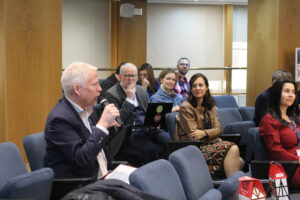
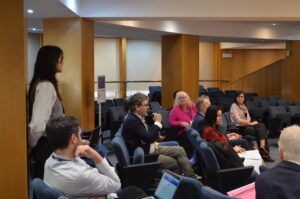
Setting the Stage: Opening Remarks
Following the closed exchange, the forum opened to a wider public, including members of the Spanish National Chapter, with introductory remarks from:
- Laia de Nadal (CRUE, NC Spain)
- Janne Pölönen (CoARA Vice Chair, Federation of Finnish Learned Societies)
- Fernando Mérida (Ministry of Science, Innovation and Universities – MICIU)
In her opening remarks, Laia de Nadal acknowledged the efforts of the coordinating group of the Spanish National Chapter, including CRUE, CSIC, ISCIII, and ANECA, along with all members of the National Chapter who are collectively advancing reform in Spain.
“Within the Spanish National Chapter, we recognise that this transformation can only advance through system-wide coherence. Universities, public research organisations, and assessment agencies must share together a common framework and instruments for success. […] All of the National Chapters here play a decisive role, because they will connect European efforts on the national level.”
– Laia de Nadal (CRUE, NC Spain)
The importance of National Chapters in the reform movement was also highlighted by CoARA Vice Chair, Janne Pölönen, who noted that the role of National Chapters as platforms to connect stakeholders in national context has been central to strategic discussions within the Steering Board aimed at outlining the next phase of CoARA. Fernando Mérida of the Ministry of Science, Innovation, and Universities (MICIU) concluded the introductory remarks by recognising the importance of the societal dimensions of research and the need to “create policies that have a purpose”.
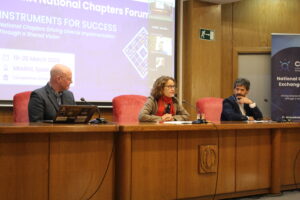
Keynotes: Vision, Alignment, and Instruments for Implementation
Introductory remarks were then followed by keynotes from:
- María Blanco (ANECA, NC Spain): The Spanish National Chapter, Tools for Success
- Cristina Martinez (European Commission): Input from the European Commission and the ERA Forum
- Henk Kummeling (CoARA Chair): CoARA’s Vision, Progress, and Next Steps
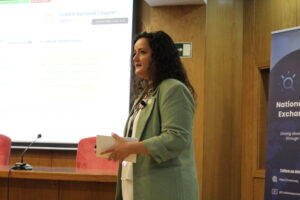
The Spanish National Chapter: Tools for Success
The first keynote, delivered by María Blanco (ANECA, NC Spain), presented the evolution and achievements of the Spanish National Chapter since its establishment in 2023. The Spanish National Chapter is currently the largest National Chapter in CoARA, bringing together 93 Spanish institutions.
“We can see National Chapters as system connectors linking the national level with the institutional level, as well as with the European and global reform and transformation.”
– María Blanco (ANECA, NC Spain)
The presentation showcased National Chapters not only as connectors, but also as platforms to build trust across different institutions through collective leadership. She also spotlighted the growing importance of interdisciplinarity and stressed the need to prioritise evaluator training models and awareness-raising. Following its first output published in September 2025 that maps institutional approaches to research assessment reform in Spain, the Spanish National Chapter is now moving towards the second phase of its activities, developing recommendations and strengthening institutional capacity.
Click here to for the presentation.
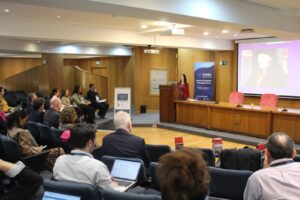
Input from the European Commission and the ERA Forum
In the second keynote address, Cristina Martinez of the European Commission connected the ongoing efforts in CoARA with the developments of the proposed European Research Area (ERA) Act. The presentation provided updates on the advancing reform effort in recent national reports and demonstrated continued alignment between ERA objectives with CoARA’s mission.
Recognising CoARA as the “main vehicle for implementation” the keynote focused on the continued commitment of the European Commission to provide dedicated funding support for the next phase of CoARA and Cascade Funding projects, as well as an aim to further support mechanisms to map and analyse changes to national and institutional research assessment frameworks.
Click here for the presentation.
CoARA’s Vision, Progress, and Next Steps
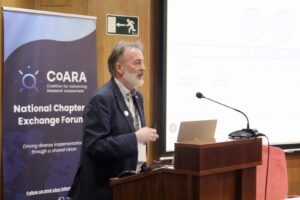
The series of keynotes concluded with a presentation by the CoARA Chair, Henk Kummeling, that outlined the vision, progress, and next steps for the National Chapters and the wider coalition. Spotlighting the growth of CoARA’s National Chapters from 5 chapters in 2023 to 19 in 2025–with more to be announced in 2026–the keynote presentation focused on how shared tools, mutual exchange, and coordinated national action can accelerate systemic reform.
As the National Chapters continue to grow, Henk Kummeling noted that empowering National Chapters will be central to the next steps for CoARA in further driving implementation. The presentation also stressed that CoARA is not only focused on national action, but also coordinated effort around the world:
“It’s all about collaboration and helping each other across initiatives that take place on a global scale to see how we can strengthen one another in the reform movement.”
– CoARA Chair, Henk Kummeling
Click here for the presentation.
Spotlight on National Chapters: Experiences, Successes, and Lessons
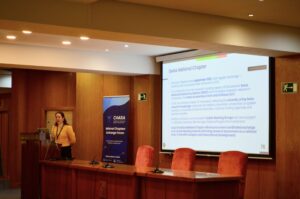
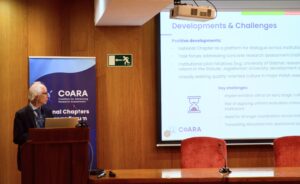
In the afternoon, CoARA National Chapter Co-Chairs presented key achievements, challenges, and progress to date from their respective country-specific contexts. The presentations highlighted what instruments and frameworks have been effective so far and examined how to overcome barriers in transforming commitments into action.
Presentations were given by the following National Chapter Co-Chairs:
- Fabien Borget, NC France – Click here for the presentation
- Olivia Denk, NC Switzerland – Click here for the presentation
- Giuliana Rubbia, NC Italy – Click here for the presentation
- Bruno Béu, NC Portugal – Click here for the presentation
- Klemen Miklavic, NC Slovenia – Click here for the presentation
- Mira Söderman, NC Finland – Click here for the presentation
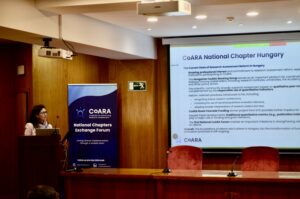
- Krisztina Szepesvári, NC Hungary – Click here for the presentation
- David O’Connell, NC Ireland – Click here for the presentation
- Stefan Penders, NC Netherlands – Click here for the presentation
- Stanislaw Kistryn, NC Poland – Click here for the presentation
- Ragnar Lie, NC Norway – Click here for the presentation
- Mathjis Vleugel, NC Germany – Click here for the presentation
- Poul Meier Melchiorsen, NC Denmark – Click here for the presentation
- Katrin Brugger, Proposed NC Austria currently under review – Click here for the presentation
- Thanasis Vergoulis, Proposed NC Greece currently under review – Click here for the presentation
Learn more about CoARA’s National Chapters at:
The first day of the forum concluded with a guided tour of the Royal Botanical Gardens and a dinner with the Co-Chairs, Secretariat, and Steering Board members, organised by the Spanish National Chapter coordinating group.
Day 2: Key Takeaways, Panel Discussion, and Conclusions
Key Takeaways from the National Chapter Presentations
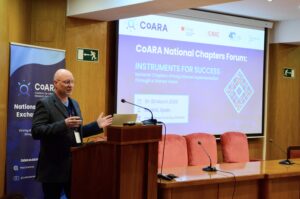
The second day of the forum began with key takeaways from the presentations given by the National Chapter Co-Chairs. Presented by CoARA Vice Chair, Janne Pölönen, the summary identified common challenges including:
- The impact of change in leadership to facilitate or hinder research assessment reform
- Challenges to ensure evaluation practices are aligned with policy-level commitments
- The need to develop platforms to map reform in different contexts and enhance coordination to share information, reflections, and tools
In addition to the key takeaways, CoARA Steering Board member, Stanislaw Kistryn, paused for a moment of reflection, acknowledgement, and appreciation for the contributions of the Ukrainian National Chapter.
“We should give credit and appreciation to the Ukrainian National Chapter who was one of the founding chapters and, despite the great challenges they have faced as a country, have continued their work to advance research assessment reform.”
– Stanislaw Kistryn (CoARA Steering Board member, Jagiellonian University, NC Poland)
Following this moment of appreciation and applause, the forum then shifted focus towards a panel discussion that explored different policy and institutional instruments that countries are currently developing to advance research assessment reform.
Panel Discussion: Policy and Institutional Instruments for Reform
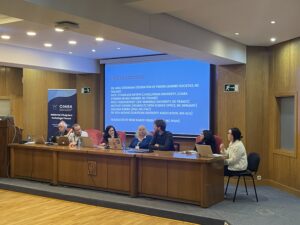
National Chapter Co-Chairs, joined by the Working Group Co-Chair of Academic Career Assessment (ACA), joined together for a panel discussion to explore tools and instruments to advance research assessment reform, particularly focusing on possibilities of transferring and adopting such instruments across national contexts.
Moderated by CoARA Steering Board member, Irene Raos Vielba (ANECA, NC Spain), featured panellists included:
- Mira Söderman (Federation of Finnish Learned Societies, NC Finland)
- Stanislaw Kistryn (Jagiellonian University, CoARA Steering Board member, NC Poland)
- Fabien Borget (Aix-Marseille University, NC France)
- Mathijs Vleugel (Helmholtz Open Science Office, NC Germany)
- Giuliana Rubbia (INGV, NC Italy)
- Rita Morais (European University Association, WG ACA)
Introducing National Chapters as coordination hubs inclusive of diversity to facilitate exchange between early adopters and non-members, Irene Ramos Vielba initiated the panel by acknowledging the evolution of the chapters:
“We are certainly moving forward into a new phase with a focus on implementation translating the CoARA Commitments and Principles into practice and concrete action. For that, we need tools. We know there is already a CoARA Collection of tools for reform produced by CoARA communities that can be used as a common baseline, but for them to be effective, we need to tailor them to specific contexts and this is where the National Chapters play a crucial role.”
– Irene Ramos Vielba (CoARA Steering Board, ANECA, NC Spain)
The panel was structured around three key topics, including:
- Identifying and developing cross-regional synergies and uptake of tools
- Challenges and opportunities for implementation within centralised and de-centralised national systems
- Enhancing collaboration with CoARA Working Groups and developing transversal tools
The panel highlighted tools currently in use and development through the case studies in Finland and Poland in the adaptation and uptake of the NOR-CAM framework. Presenting on the development of FIN-CAM, Mira Söderman, described it as a participatory process in Finland, involving existing frameworks from Finnish universities. To further facilitate implementation, Söderman noted that an interactive webtool version of FIN-CAM is currently under construction. Stanislaw Kistryn, presenting on the Polish perspective of the developing POL-CAM, noted that the size, complexity, and prevalence of bibliometrics impacted the adaptations and uptake of NOR-CAM in the national context in Poland. Despite these factors, Kistryn highlighted that the adaptation of the framework in the Polish system has influenced the language and approach used in assessment processes of individual researchers, which is gradually shifting towards recognising broader contributions.
Further discussions also emphasised the importance of developing global frameworks and transversal tools, exploring the potential development of an EU-CAM framework in the future. Other panellists intervened to express their interest in adapting similar frameworks within their respective countries in the coming years, including Italy and Germany.
Rita Morais, representing the Working Group for Academic Career Assessment, also noted that the main output of the WG is the development of an interactive webtool which aims to consolidate fragmented tools to support institutional reform that can be adapted to different use cases and stakeholders.
The discussions further emphasised the importance of experimentation and pilot initiatives to test what is effective and to set new standards for evaluation and how mutual exchange can further drive implementation:
“We still have a lot convincing to do on the actual benefits of research assessment reform. And what I feel we need are good examples of what has been tried and tested in other countries and to showcase science-based studies of the positive impact of these reforms, so its great to learn what’s happening other countries”
– Mathijs Vleugel (Helmholtz Open Science Office, NC Germany)
Focusing on challenges in both more centralised and de-centralised national systems, discussions highlighted the issue of different forms of leadership within different national systems that impact implementation, as well as the need for cultural change in the perceived relationship between research excellence and research reform. Finally, the panel demonstrated the challenges and opportunities in the development of transversal tools and the delicate balance in creating tools and frameworks that are both specific enough to address specific areas of assessment, while also remaining flexible enough to be adapted to a wide variety of national, legal, and cultural contexts.
Overall, the panel underscored the importance of collaboration and coordination among National Chapters and other CoARA communities as the coalition further advances implementation and highlighted the important challenge in the current phase of CoARA of developing and adapting shared tools that can be effectively transferred across diverse contexts.
Conclusions
Looking ahead, National Chapter Co-Chairs reaffirmed their shared commitment to strengthening collaboration, developing practical instruments, and advancing implementation through collective learning. Upcoming activities and future National Chapter exchanges will continue to support this shared vision as CoARA moves into its next phase.
We extend our gratitude and appreciation for our co-hosts from the Spanish National Chapter, CRUE, CSIC, ISCIII, and ANECA, for providing a platform for fruitful discussions that will continue to shape the future strategy of CoARA in the months ahead. We also sincerely thank the wonderful hosts and IT team at UCM who made the event possible. Gracias!
We look forward to gathering together again next year. If you are interested in hosting the next CoARA National Chapter Exchange Forum in 2027, please click here to submit your proposal to host in your country!